Nicholas Tongused Lenovo ThinkPad T480
18 / 46
The used ThinkPad T480: buying someone else's write-off
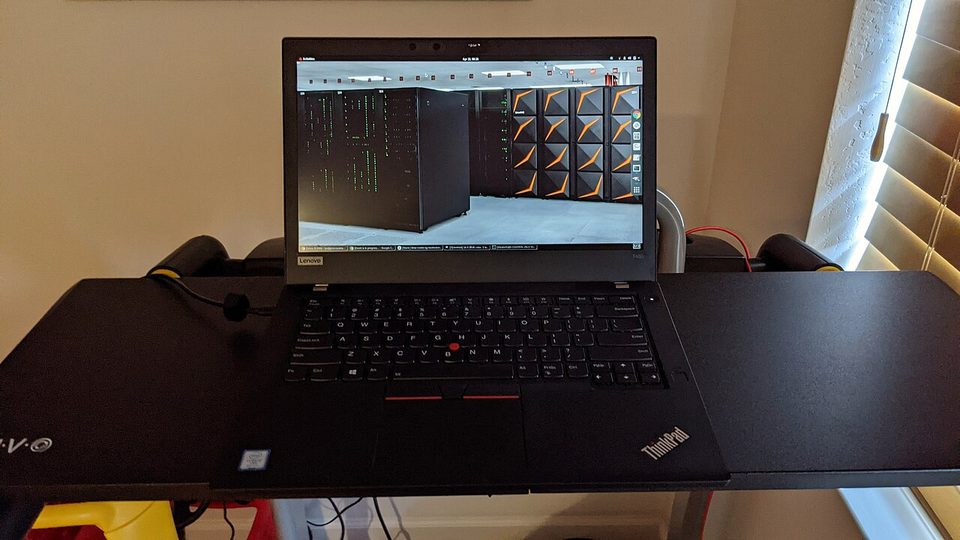
The laptop I'm typing this on cost less than the chair it sits on. Lenovo ThinkPad T480, bought off eBay in 2024 from a refurbisher in Dallas for under $200, i5, 16GB I added myself for $25, screen that is not the screen anyone would have chosen in 2018. It boots Fedora in eleven seconds and has never once missed a day of work. Notebookcheck's 2018 review of the machine graded it against new-business-laptop standards and called it good, and eight years later the interesting review isn't the laptop anymore, it's the market that decided it was worthless.
The task explicitly: used-market pricing. The best data I've found is pcprice.watch's sold-listing tracker, updated June 2026: a T480 clears eBay at a median around €175, with the middle half of sales between €145 and €242, and here's the number that matters, listings ask €257 to €375. The gap between asking and sold on this machine is between 47 and 114 percent. In the US that lands as roughly $150 to $260 for a clean i5 unit by what I've watched in listings for two years, and the discipline is the same in dollars: the sold price is the price. The asking price is a fiction a seller wrote at midnight.
the part everyone gets wrong
People buy used laptops by spec and get burned by condition. The T480's spec sheet reads fine: 2018, quad-core 8th-gen i5 or i7 at 15W, two DDR4 slots to 32GB, a 2.5-inch bay plus an M.2 NVMe slot, Thunderbolt 3, and a dual-battery design where the external brick hot-swaps while the machine runs. All true. What the spec sheet doesn't say is that these came out of corporate fleets on three and four year leases, which is why a four-figure laptop became a two-figure one, and that fleet origin is both the bargain and the risk.
The risk has a name: the supervisor password. Ex-corporate machines occasionally arrive with a BIOS supervisor password their old IT department set, and on a ThinkPad that lock is not a reset-the-CMOS-jumper problem. It can block boot order changes, virtualization settings, and in the worst cases the fix involves physically reading or swapping an EEPROM chip. My rule, learned the smart way from someone else's mistake: ask the seller to photograph the BIOS setup screen before you pay, and walk away from anything locked, no matter the price. There's no bargain at any number if you don't own the firmware.
the mechanics
Why this specific model, out of the whole used ThinkPad ladder: the T480 is where the used market's price ladder intersects its liquidity. It's the most liquid used ThinkPad in existence, over 200 sold per month in that tracker's data, which means pricing is stable, supply is deep, and a bad unit is a return rather than a saga. The 8th generation chip is where Lenovo moved from two cores to four at the same 15 watts, so the multi-thread jump over a T470 is enormous, and the T470 costs only a little less used, which is the shape of a correct purchase.
The upgrade path is the rest of the argument. Two RAM slots, both user-accessible under one screw. A 2.5-inch bay for a SATA SSD plus an M.2 slot for NVMe, so you can have fast boot and a big data disk in the same machine. External battery that swaps hot, which is a feature every modern laptop has deleted in the name of thinness and which I have used exactly once, at a gate in Hobby, when the first battery quit at 38 percent and nobody had to know.
Linux, since I always get asked: ThinkPads of this era are the reference hardware for desktop Linux. Fedora and Ubuntu install with suspend, function keys, and the TrackPoint working, no custom kernel flags. The fingerprint reader is the one component with third-party driver friction, and I leave it disabled anyway, because I don't want biometrics as a fallback on a machine whose threat model includes strangers at doors.
Firmware is where this machine earns its security nerd reputation. The Wi-Fi whitelist that hobbled card swaps on older generations is gone by the xx80, so the wireless card is yours to change. And the Intel Management Engine, the co-processor that runs its own miniature OS on the mainboard, can be neutered with me_cleaner, which requires an external SPI flasher, a clip on the chip, and an afternoon of reading before you touch anything. I did it on a Sunday with the CH341A I'd bought for a router and forgot about, and the machine boots cleaner for it. That's more control over a laptop's firmware than any $1,300 consumer machine sold today will give you.
where it breaks
The screen is the honest ceiling. Most T480s shipped with dim 1080p IPS panels that were fine in 2018 and look tired next to anything modern, and the WQHD option is rare enough on the used market to price like a feature. If the display matters more than everything else, this is the wrong laptop and you already know it.
The battery is the predictable one. Eight-year-old packs hold a fraction of their rating, the genuine replacements are more expensive than the machine, and the aftermarket ones vary from fine to fire. Budget for a genuine pack and treat it as part of the purchase price.
The other breaks are fleet scars: cracked hinges, missing rubber feet, dead ports, keyboard wear on the A and S keys, and the occasional machine that runs its fans like it's calling for help. None of it is disqualifying. All of it is leverage, and sellers know it.
My admission, and it's a real one: I bought the 16GB stick before the laptop arrived, and it was the wrong speed. Not wrong size, wrong speed, a number I'd checked twice and still gotten wrong, and the machine ran one stick for six weeks while the correct one shipped. The most repairable laptop on the market and the first upgrade I did was to install the part wrong.
what to do
- Anchor every offer to the sold median, not the listing. On a T480, asking prices run 50 to 100 percent over what units actually clear at, and the seller who meets the median is the seller who read the same data.
- Demand a photo of the BIOS setup screen. A supervisor password lock is a $0 machine, and there is no price at which it isn't.
- Plan $60 of upgrades into the purchase: genuine battery, RAM to 16GB if it shipped with 8, and an NVMe drive if the M.2 slot is empty. The base config is the floor, not the product.
- If firmware matters to you, budget the Sunday for me_cleaner and a hardware flasher, and read before you clip. If it doesn't, know that you're running vendor firmware on a co-processor you didn't choose, same as everyone with a modern laptop.
- Install Linux the first evening. The hardware support is the best in the industry, and the machine's remaining useful life is longer in it.
The Asset Recovery sticker from the leasing company is still on the palm rest, half peeled, and I've left it because peeling it is how you find out the adhesive takes the paint with it.
Offer the median. Walk on the locked ones. Everything else is a $25 part.