Nicholas TongEufy S330 eufyCam 3 (with HomeBase 3)
38 / 46
Eufy S330 (eufyCam 3): what local actually means
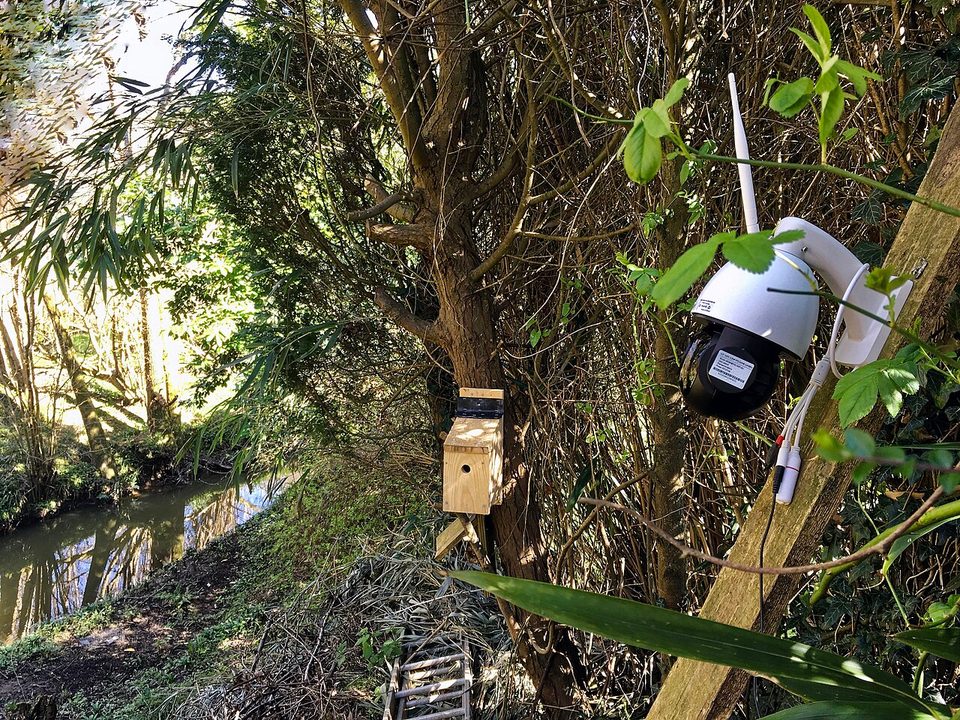
The clip I care about most from this camera is eleven seconds of a possum climbing into the bird box the previous owners left on my fence, and I have watched it maybe six times, which is more than I've watched any of the clips of people I have actually paid attention to. That's the dirty secret of event cameras: the footage you keep is mostly wildlife and weather, and the fee structure you're avoiding is the one selling you back the ten clips a year that matter.
The bigger thing this camera drags behind it is history, and I'm not going to write around it. In November 2022, a security researcher published evidence that eufy cameras were uploading thumbnail images, including faces, to the company's AWS servers even when cloud storage was switched off, and that some of those images stayed reachable after deletion. The Verge's investigation went further: streams from eufy cameras could be watched from the other side of the country in VLC, with no encryption at all, by anyone holding the right URL. This was a company whose marketing said your video "never leaves the safety of your home." A class action followed in January 2023, Anker's own answers got worse the longer The Verge pulled at them, and New York's Attorney General eventually took a $450,000 settlement with findings that streams were transmitted without proper encryption and could be reached without authentication.
The S330 is the flagship Anker sells on the promise that none of that happens: local storage, no monthly fee, facial recognition on your own hub. I paid for the two-camera kit myself, $549.99 at the time, to test the promise instead of repeating it. Keep that framing; it matters for the rest of the review.
the part everyone gets wrong
The wrong read is "local storage, therefore private," which is the sentence the marketing wants in your head. Here's the thing: local storage and cloud contact are not opposites, they're two axes, and this product lives on a diagonal. Video sits on the HomeBase 3 box on your shelf. The app that reaches it, from your phone, from work, from a hotel, does so through eufy's relay infrastructure, through an account. The Ambient's April 2023 review calls the feature set all-in-one and praises the absence of fees, both fairly, and neither sentence is about where the control plane lives.
The second wrong read is mine to confess: for a week in late 2022 I told a colleague the thumbnail story was technical noise, the kind of thing security people amplify because the words "cloud" and "thumbnail" rhyme. Then the VLC reporting landed, and the colleague had bought two of these cameras that same month, partly on my having called eufy's local-first marketing the honest one. I spent an evening with him redoing his account security and reading Anker's statements out loud, and my version of the honest review is written on that debt. "Local" is a storage decision, not a trust decision. Vendors who sell it as trust have already spent that money.
the mechanics
The kit is two cameras and one hub. Each camera is a white and dark-grey slab about nine ounces, 4K resolution at 3840 by 2160, a 135-degree field of view, a spotlight, a siren, a rechargeable battery eufy rates at six months, and a solar panel built into the top edge, which is the whole differentiator: with about two hours of direct sun a day the battery stays topped off and the charging ritual, the one that killed most battery cameras for me, just stops. The cameras don't talk to your wifi. They pair to the HomeBase 3, which plugs into your router with an Ethernet cable and holds the recordings on its own storage, 16GB inside, expandable with a 2.5-inch drive you supply, which is the single cheapest way to make this system serious.
The AI is the other half of the pitch. The hub runs recognition locally: faces it learns get tagged, people get separated from animals and vehicles, and after a few weeks it will tell you "known face, Nicholas" instead of "person detected," which sounds like a party trick until you realize how much alert fatigue it deletes. Trusted Reviews tested it in April 2023 and rated the video, the offline recording, and the detection pipeline highly while dinging the base storage and the price, and a year of mine agrees with their numbers. PCMag's review found color night video clean if less vibrant than daylight, black-and-white detail out to about 30 feet, and loud two-way audio, all of which matches what I've got.
where it breaks
The first break is the one you now expect: notifications. Push notification thumbnails have to touch the cloud, because that's how push works, and to be fair to the company, they've said so plainly since 2022. The settings include a text-only notification mode, and that's the one I run, because text is the mode with zero cloud contact. It's also uglier and slower to triage, which is the trade, and most people will keep the thumbnails and never think about it again. Your call, but it should be made on purpose.
The second break is event recording. No continuous mode, no 24/7 timeline, clips only when something triggers, and clip length trades against battery. As a wildlife documentary that's fine. As a security instrument it means gaps, and the gap is where the thing you'd want footage of lives. I've come to think of battery cameras as doorbells with better optics: presence sensors that occasionally produce evidence.
The third break is Houston weather. Two hours of direct sun is a real requirement, and from June through September the afternoon sky over my street looks like milk, and the battery slid from full down to about 60 percent during the worst two weeks before the sun came back. It recovered, and it's still the best battery experience I've had in this category, but "solar" is a promise the Gulf Coast signs in pencil.
The fourth break is the price of the promise. At $549.99 for two cameras and a hub, this costs more than most people's first laptop, and the honest comparison isn't against subscription cameras, it's against a wired camera feeding a local recorder, which costs less and records continuously. I'm not telling you not to buy it. I'm telling you what the money buys: convenience and fees avoided, not maximum capability.
what to do
- If you buy this, buy it for the no-fee storage and the solar, and set up the hub yourself with a 2.5-inch SSD in it the same week. The 16GB internal storage is a demo.
- Choose your notification mode deliberately: text-only for the smallest data footprint, thumbnails for speed, and know you picked one.
- Put HomeBase 3 on your IoT VLAN, not next to your file server. It's an internet-facing appliance with an account, and it should live with the other appliances.
- Turn facial recognition off if the thought of a vendor learning faces on your hardware bothers you more than generic alerts. The camera works fine without it.
- Firmware updates land through the app and the company's track record on disclosure got forced into existence rather than offered. Check for them monthly, on your schedule, and read the notes before you tap.
The cameras watch my fence and my side gate, they've made it through one hurricane season on solar alone, and the bird box clip is still the best thing in the library. The possum comes back most Tuesdays. The camera knows him now, a known face, and refuses to alarm me about it.
Local means the drive is yours. It doesn't mean the truth is local.