Nicholas TongRing Video Doorbell (battery)
37 / 46
Ring Video Doorbell: the footage doesn't live at your house
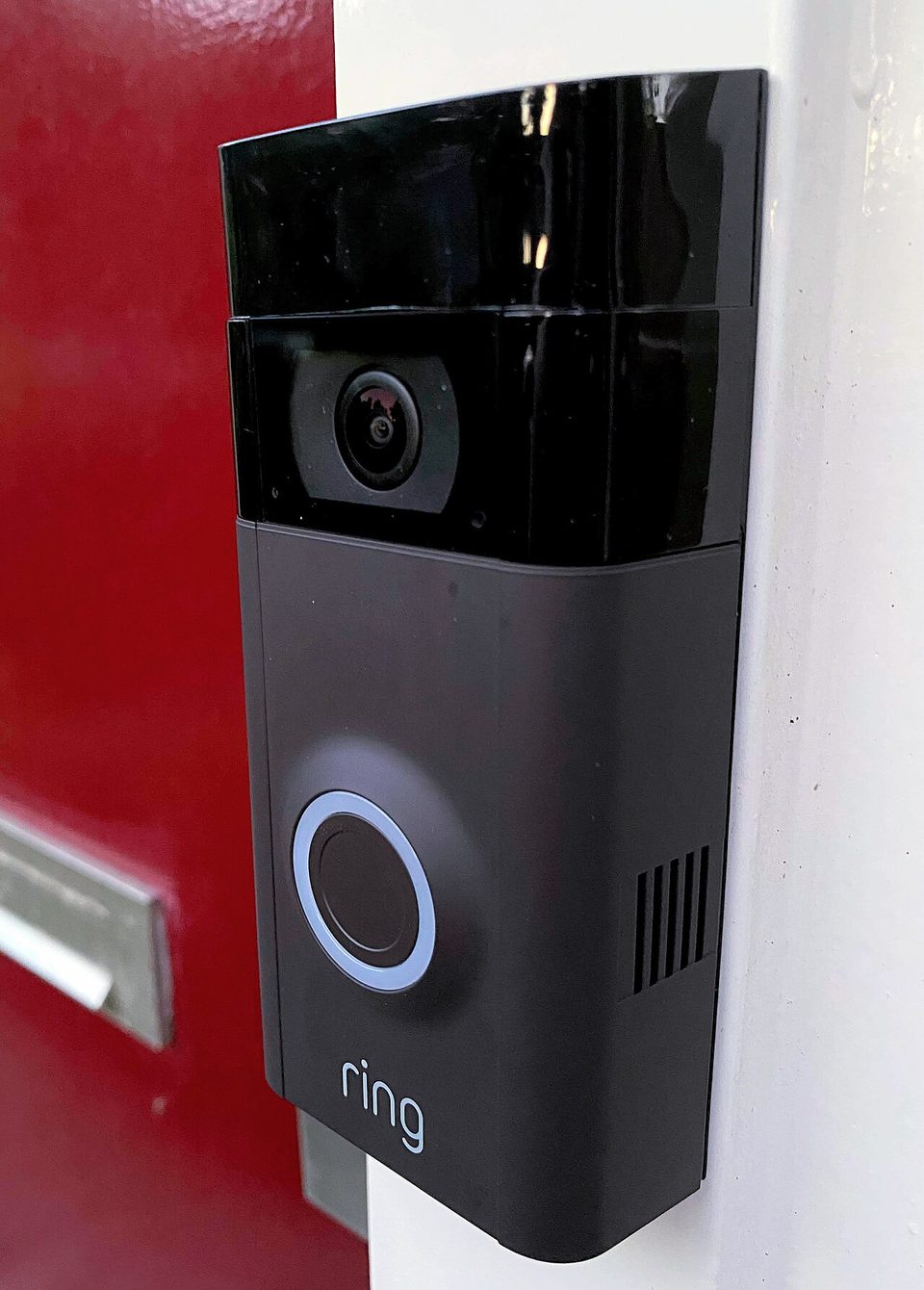
In 2017, an employee of Ring spent about three months watching videos from customers' cameras, and the FTC's complaint documents what he searched for: cameras named "Master Bedroom," "Master Bathroom," and "Spy Cam." He looked at recordings from at least 81 female customers, often for an hour a day, and nobody at the company caught it until another employee did. In 2019 and 2020, credential-stuffing attackers took over customers' accounts and cameras and used the speakers to talk to people in their homes. In May 2023 the FTC settled with Ring for $5.8 million over all of it, ordered the company to delete face embeddings and pre-2018 videos, and mailed refunds to 117,044 customers in 2024.
I'm opening with that because the single most useful thing I can tell you about this product is what it is: a cloud camera that happens to have a doorbell button. The footage doesn't live at your house. It lives on servers owned by a company whose own regulator has documented what its employees could see. Reuters covered the complaint the day it landed, and I'd encourage reading the filing instead of my summary, because my summary is the polite version.
I've run the base battery doorbell on my own front door since 2021, paid for it myself at the $99.99 list of the era, and the hardware is fine. The honest review has to hold both of those facts at once.
the part everyone gets wrong
The wrong read is that a doorbell camera is a security device. It's a sensor and a recorder that reduce a specific, small risk: porch packages, porch visitors, the occasional raccoon standoff at 2am. As a security control against an actual break-in, a camera at head height on the front door has a batting average I'd describe as decorative, and Wirecutter's 2026 doorbell guide treats it that way, as a convenience product that happens to record.
The second wrong read is the privacy one, and I want to be careful here, because the smug version of this review is easy to write and useless. People who own Ring doorbells are not careless. The product is priced and designed so that the answer to every objection is another toggle you'll accept at setup time. The meaningful question isn't whether you're being watched. It's who holds the recording, for how long, and who else they might show it to, and that question has a documented answer history with Ring that includes the FTC case above and a years-long program of sharing user clips with police departments through its app, which EFF has tracked and criticized as building neighborhood surveillance infrastructure one porch at a time.
the mechanics
The battery model is a camera, a passive infrared motion sensor, a wifi radio, and a rechargeable pack in a slab that mounts beside or over your doorbell wiring. Motion wakes it, it records, the clip uploads, your phone gets a notification, and you watch from anywhere. Installation is genuinely fifteen minutes with a drill and the included level, which is the part Ring does better than anyone, and the app is the reason people stay: it's smooth, it's fast, and the notifications arrive before the package driver has reached the sidewalk.
What you get without a subscription is live view and the button. What you get with one, starting around $5 a month, is the recording history, and that's the actual product. Trusted Reviews calls the plan almost essential, and I agree with the spirit: an event camera with no event memory is an intercom. The lineup in 2026 runs from the $50 wired entry model through $100-ish battery units to $250 4K Pro models with pre-roll and radar motion mapping, per CNET's May 2026 comparison, so "Ring doorbell" describes a range, and every rung of it points at the same subscription.
Two architectural facts live under all of it. Amazon Sidewalk shares a slice of your home's bandwidth with neighbors' devices by default, which is opt-out, not opt-in. And Ring now offers end-to-end encryption for video, an opt-in mode where only your devices hold the keys, plus a key-rotation scheme they describe on their privacy page. Both are real improvements over the architecture the FTC sued. Both are off by default.
where it breaks
The first break is the outage math. Internet down, the camera is a plastic button. Power down and wifi down, same. I've watched this from the inside: a facility I worked with years ago lost cameras for eleven hours during a storm because the network upstream died, and the cameras' absence during the one night it mattered was the entire lesson. Your doorbell's footage of the interesting event is exactly as available as your isp, your router, and Ring's cloud, and only the middle of those three is yours.
The second break is the subscription economics. The hardware is cheap on sale, often under half list, and the plan quietly exceeds the doorbell's cost within about a year. That's not a scam; it's the business model, and you should enter it with your eyes open: you're renting a service that has your footage, and the price can change, and the exit is deleting your account history.
The third break is the trust history, and I've already told you the worst of it. The FTC settlement forced multi-factor authentication into the product, which means the account securing your front-door camera now asks for a second factor, which is what should have been true in 2019 when the takeover stories were on the news. My admission: I put my parents on a Ring doorbell in 2020 with a reused password, and I spent a genuinely uncomfortable evening in 2021 redoing that account properly, unique password, MFA, after reading the takeover reports. The install cost an afternoon. The embarrassment cost more.
The fourth break is the neighborhood-scale one, and it's not about you: your camera films the sidewalk, the street, the neighbor's door, everyone who visits everyone. Combined with the police-sharing program, one porch camera becomes a node in something larger, and whether you're comfortable with that is a question the setup wizard doesn't ask.
what to do
- If you buy one: unique password, app-based MFA, and the end-to-end encryption mode switched on the day it mounts. It costs you some notification convenience. Decide that trade deliberately rather than by default.
- Turn Sidewalk off if you didn't choose it. Read what it does first; some people genuinely want it. You should want it on purpose.
- Budget the subscription from the start, or buy a camera that records locally, because a doorbell without event history mostly just rings.
- Think about the field of view before mounting, not after: what the camera sees is not only your data. Post a sticker. It's cheap and it's honest.
- For a local-first alternative, this is the section where I'd point you at the same brands I run in the lab, and I'll write those up on their own days. Ring's hardware is fine. The architecture is the decision.
The doorbell has outlasted two battery generations and one hurricane season where it recorded nothing but rain for a week, which is the most Houston footage imaginable. The package thieves were never caught. The raccoon was.
Your porch footage lives at their datacenter. Decide if that's a purchase or a lease.