Nicholas TongAPC Back-UPS Pro BR1500MS2 UPS
31 / 46
the battery was dead the whole time
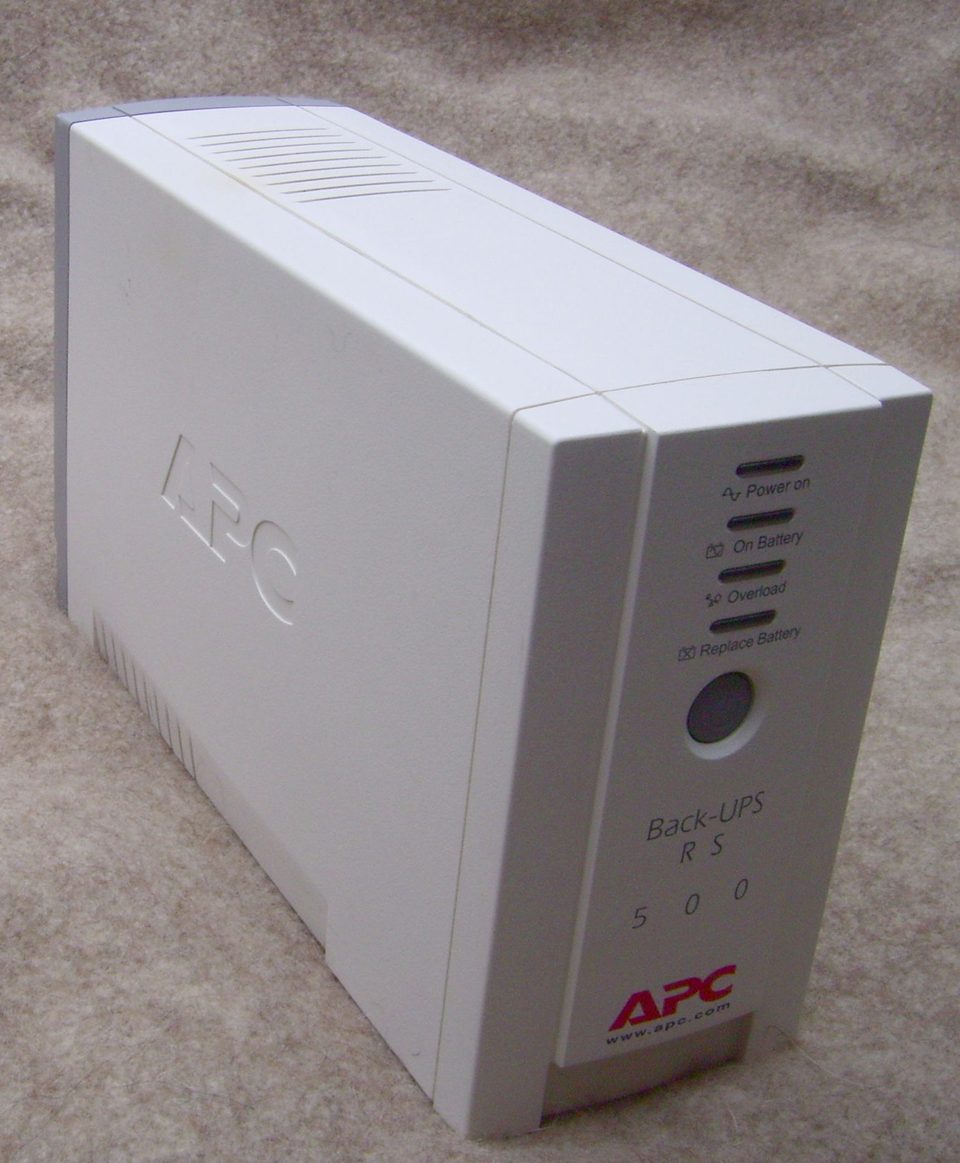
When Beryl came through Houston in July 2024, my block went dark at 4am and the UPS under my desk started beeping every thirty seconds, which is exactly what it is supposed to do. The network stayed up. The outage radar on my laptop kept refreshing, because the laptop was on the UPS too, and I sat there at half past four reading a map that said my neighborhood would be dark for a while. It was dark for 62 hours. The UPS bought me about an hour of network and one lamp, which is not much, and they were the hours I needed to make two phone calls and watch the map turn orange.
The unit under my desk is a Back-UPS Pro BR1500MS2, APC's mid-size UPS: 1500VA, 900 watts, ten outlets with five on the battery, one USB-A and one USB-C charging port, and automatic voltage regulation. It has listed around $230 for years, and deal coverage last November put it at $220 for Black Friday, which is roughly the price of one evening of not being blind. No purchase disclaimer needed at that number, but the usual transparency applies: I bought it myself, and this is a report from three years of owning it, including the part I got wrong for two of them.
the part everyone gets wrong
People buy a UPS for runtime, and runtime is the least interesting thing it does. The real jobs are the two you never see: the voltage correction that quietly handles the brownouts a Gulf Coast grid throws at you in July, and the clean signal that lets your machines shut down like adults instead of losing writes to a power cut. A surge protector stops a spike. A UPS does that and then keeps the computer alive long enough to save its state, which is the difference between an annoyance and a corrupted database.
The other thing people get wrong, and this is the part that cost me: the battery is a consumable with a three to five year life, and the box will not tell you clearly when it is dead. The protected light stays green. The self-test, on this model, is a button you hold and a result that reads as a diagram nobody taught you to read. Mine ran for two years with a battery that had quietly become a brick, and the whole time I thought I had a UPS. I had a very heavy surge protector with opinions.
the mechanics
First, the numbers, because the marketing number and the real number are different things. 1500VA is not 1500 watts. The watt rating is 900, and the difference is power factor, which is the ratio of the power your gear actually uses to the power the UPS must supply. My load, one router, one firewall, one switch, a network recorder, and a laptop charger, pulls about 150 watts. At that draw the BR1500MS2 gives me roughly an hour, measured during two real outages and one self-test I ran with the freezer unplugged. At the full 900 watts it gives minutes. Runtime math is a curve, not a sticker.
Second, the wave shape. The BR1500MS2 outputs a stepped approximation of a sine wave, not a pure sine wave, which is the honest cost of the price. For a modem, a router, a switch, and a laptop charger, that is fine. For a desktop power supply with active power factor correction, stepped output can make the supply whine, run warm, or in unlucky cases refuse to run at all. Most home gear does not care. I want you to know the difference exists before you plug a workstation into one, because the failure mode is confusing and nobody connects it to the UPS.
Third, the monitoring, which is the part I actually care about. The BR1500MS2 talks over USB, and a small daemon on my server polls it, logs the voltage, and shuts machines down in order when the battery gets low. The config is ten lines. It means the shutdown decision is mine, scripted, and tested, instead of a beep and a prayer. My dad, who spent thirty years keeping machines running by the ship channel, asked me once what the box under my desk does and I told him it watches the power so I do not have to. He approved, which for him is a paragraph.
where it breaks
The battery. It is a consumable, it fails silently, and the replacement is a half-hour job with a connector that fights you. The original in mine lasted three years in Houston heat, which is the short end of the window, because the closet it lives in hits the mid eighties when the sun is on that side of the house. The replacement has the install date written on it in marker, March, because the sticker on the original had none and I do not intend to guess twice.
Then the beeping. Thirty seconds, forever, through a 4am outage, and there is no setting that turns it off entirely, only ones that change the pattern. I understand the intent. I stood in the dark with a flashlight in my teeth trying to find the mute button anyway, and the mute button is a software concept, not a physical one, which I learned the hard way.
And the cloud line, because there is one worth naming. APC's Smart-UPS line has a cloud portal, an account, and telemetry that flows to Schneider Electric's servers. The BR line, this one, is dumb in the good way: USB, local, no account, no app, nothing that phones home. That absence is worth real money to me, and it is the reason I bought this model instead of the one with a dashboard. I run my own monitoring. I do not need my UPS to have a login.
what to do
- Run the self-test on your UPS tonight and read the result properly. If you cannot interpret it, the manual is four pages and worth ten minutes.
- Read the date on the battery. If it is older than three years in a warm closet, budget for a replacement now, before the season starts.
- Plug the network gear in, not the printer. Laser printers draw like a kettle and they do not need battery backup, they need to not be on the same strip.
- Put the monitoring daemon on the one machine that never sleeps, and test the shutdown script once with the UPS unplugged. A backup you have not restored from is a wish, and a shutdown script you have not run is the same thing.
- If you are buying new, decide whether you want an account on your power hardware. On the BR line you do not get one, and I think that is a feature.
The BR1500MS2 is a heavy box that does an unglamorous job and fails in ways you only find out about when the grid does. Mine bought me an hour during Beryl and taught me two years of humility about the word "protected".
Read the battery date tonight. That number is the only honest spec on the box.