Jason LeeUplift V2 standing desk
Item 36 of 45
Sold on the wrong argument, good for a different one
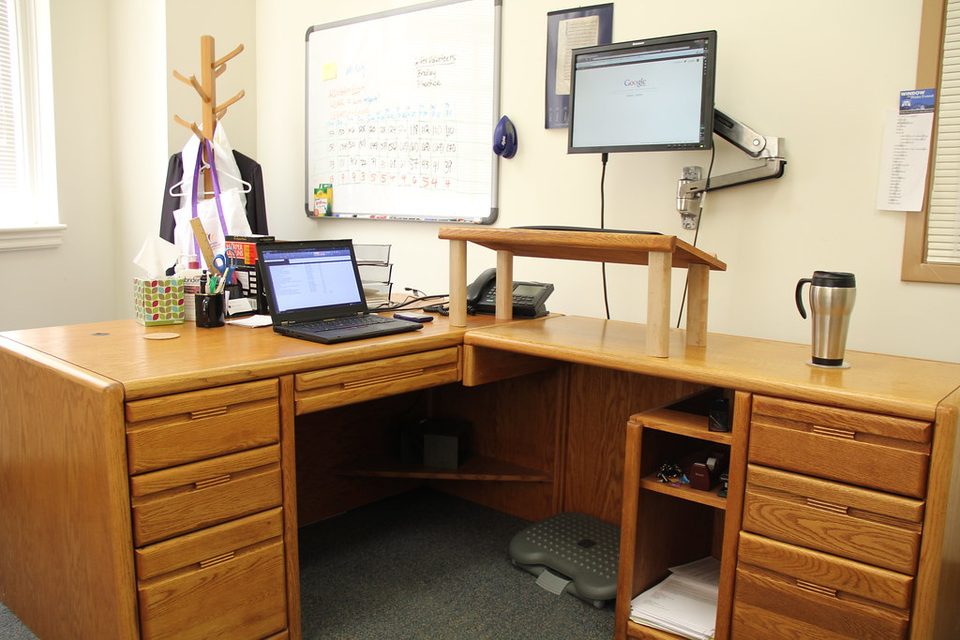
In 2016 the consulting firm I worked for decided the whole floor would get standing desks, every desk, and a wellness consultant came in to explain why. The argument was metabolic: sitting was the new smoking, she said, and standing burns more calories, and the desks would arrive in six weeks. The desks arrived in six weeks, motorized, expensive, with a card taped to each one explaining the memory presets. A year later I counted, from the far side of the floor, how many were actually at standing height. Three. Two of those belonged to people who had requested them personally. The rest of the floor had accepted the desk, kept the card, and sat, because the argument that had bought the desks was not an argument that survives an afternoon of standing. I bought one anyway, two years later, for my apartment.
I've never resolved that contradiction, and I've come to believe it isn't one. The standing desk was sold on the wrong argument and turned out to be a good tool for a different reason. The V2 frame from Uplift is the version of this object that has survived contact with reality the longest, and what's interesting about it is not the health claim. It's which boring virtues the price actually buys.
The health claim was never the strong part
The study first, as an autopsy. The desks were marketed as a health intervention, and the strongest independent look at that claim, a Cochrane review of workplace interventions to reduce sitting at work, found the evidence for sit-stand desks' health effects low in quality and modest in size; standing is not exercise, and the calorie arithmetic that sold the wellness rollout was a rounding error against a sandwich. What survived the marketing collapse is the quieter claim: sitting less is probably better than sitting more, and a desk that makes alternating easy lowers the cost of the habit. That claim is true of a $200 desk with a hand crank. It's also true of the V2, and the difference between them is not health. It's whether the tool will still work in 2041.
The frame is the warranty
Now the mechanism, and the honest way to see the V2 is as a frame sold with a promise about its motor. The commercial version of the frame carries 355 pounds, moves between 25.3 and 50.9 inches, on a three-stage C-frame with two motors rated at 1.4 inches per second and below fifty decibels, and the number Uplift's price actually rests on is the fifteen-year warranty on frame and motors, a warranty that pays out: the reviewer at ErgoRated, who has run a 60-inch V2 daily for 22 months, notes the company replaces failed motors free for the full term (the full spec and comparison are here). Against the field, the shape of the trade becomes visible:
| Desk | Price (60-inch) | Stability at standing height | Warranty | Motor noise |
|---|---|---|---|---|
| UPLIFT V2 Commercial | $749 | Excellent | 15 years, frame and motors | Under 50 dB |
| Vari Electric | $695 | Good | 5 years | About 52 dB |
| FlexiSpot E7 Pro | $479 | Good | 15 years frame, 5 years motor | About 50 dB |
| Fully Jarvis Bamboo | $689 | Excellent | 15 years | About 55 dB |
The aggregated owner verdict across some 2,400 reviews sits at 4.7 out of 5, and the recurring complaint is the honest one: the two-leg C-frame exhibits wobble at standing heights, especially past 45 inches and under a pair of large monitors, which is where the desk spends the hours you bought it for. The other mechanism worth naming is the configurator. The base price is a lobby; the desktop, the cable tray, the mat, and a hammock Uplift has been known to throw in free attach at checkout, and the price adds up quietly, which the reviews describe as retail theater in both directions, upsells on one shelf and freebies on the other, both working on the same instinct. Consider the incentive: a company whose warranty is its differentiator profits from a frame that never fails and a customer who keeps accessorizing, and both interests are served by the same checkout screen.
The case for the cheaper desk, made honestly
The counterargument is strong and I want to give it its best form. The FlexiSpot E7 Pro costs $479, carries a fifteen-year frame warranty, and its motor warranty of five years expires long before most desks die but long after most habits do. For a person who sits at 43 inches with one monitor, the V2's stability advantage at full extension is a difference measured in millimeters of shake nobody notices, and the quietness argument is a premium paid for a motor that runs for forty seconds twice a day. The health logic cuts at the price too: if the desk's actual benefit is the habit of alternating, the cheap desk delivers the identical benefit, and the $270 saved buys the chair, which matters more. The wobble complaint is real where it matters, at 48 inches and up, and ErgoRated's own verdict was that power users are jumping ship for cheaper four-legged frames, which is the market answering the premium with arithmetic. I hold all of that, and I'll note my own incentives aren't clean: I own a standing desk I bought at the exact moment this category was convincing people like me that sitting was a character flaw, so I'm reviewing my own purchase with the receipt in hand.
The variable is your extension
It depends, and the dependency is how high you actually stand. A tall person, or anyone running a heavy multi-monitor setup at 48 inches and up, where the two-leg frame's wobble is real and the motor does real lifting: the V2's stability at full extension and the fifteen-year payout are worth the premium, and I'd buy it again for exactly that setup. Everyone else, one monitor, standing at 42 or 44 inches: the cheap desk is the same tool, and the premium buys a decibel. Watch one variable over the next few years: the price of four-legged frames, because stability at full height is the one advantage the premium is actually charging for, and the day a $400 desk holds steady at 50 inches, the argument for the V2 is a warranty. The floor in 2016 stayed seated because the argument for raising the desks was false. Mine goes up most mornings for a reason nobody markets. It's the only meeting my back has agreed to attend.