Jason LeeGoogle Pixel 9 Pro
Item 39 of 45
The phone is excellent, and the phone is no longer the point
The review unit I handled most closely in six years of consulting was not a phone. It was a $40,000 room: a client's videoconference suite, installed in 2019, with a ceiling microphone array, two 85-inch displays, and a control panel whose interface had been designed, I can only assume, as a punishment for whoever touched it. The room worked beautifully for eighteen months and then its vendor was acquired, and the cloud service the room depended on was sunset in a rebrand, and by the time I was called the suite was a very expensive sculpture. Nobody had bought a sculpture. Everyone had bought a room that worked. The distinction between those two purchases is the entire subject I want to aim at this phone, because by every physical measure the Pixel 9 Pro is one of the best objects Google has ever shipped, and the object is not the thing being sold.
The turn is this: the Pixel 9 Pro is a superb phone wrapped around a subscription-shaped future, and in 2026 the wrapper is the review. Launched in August 2024 at $999 for the compact Pro, the same price as the larger Pixel 8 Pro it replaced, it now sits in the lineup as the cheapest new-model Pro while its street price has sagged to the high six hundreds, which is the market telling you something the launch coverage did not (the pricing history is tracked here). The hardware is the good part, and I want to give it its paragraph before the audit.
The hardware earns the price, and the hardware is not the product
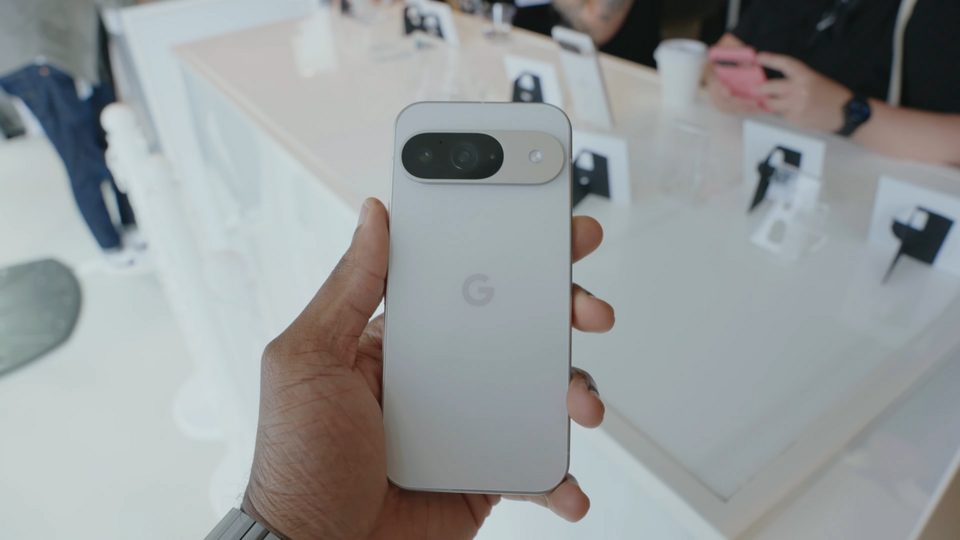
Start with what the reviewers agree on, because the agreement is unusually broad. The compact Pro finally arrived, a 6.3-inch flagship with nothing compromised to get it: 16GB of memory, a triple camera with a real 5x optical zoom, a 42-megapixel selfie camera, and a screen bright enough at 3,000 nits that the Yahoo review's tester needed 93 percent brightness in direct sun, which is the highest compliment a screen can be paid. The camera system remains the class of Android, matched or beaten on paper by rivals and unmatched in the reliability of what comes out the other end, and the seven-year update promise is the single most consumer-friendly sentence in the industry. The complaints are consistent too, and they have a shape: the Tensor G4 chip benchmarks far behind the iPhone and the Snapdragon flagships, Geekbench numbers about two-thirds of its Apple competition, and the gaps show up in games and video editing rather than in the Google apps the chip was tuned around. That last clause is the tell. The phone is fastest exactly where its maker's interests live.
The subscription is the product, and consider the incentive
Now the audit, and the Pixel earns the sharpest version I can write. Buying a Pixel 9 Pro in 2024 meant a year of Gemini Advanced bundled, 2TB of storage, the AI features on the device migrating behind account sign-ins, and a lineup whose differentiating features, Magic Editor, Call Notes, the assistants, run on Google's servers and Google's terms. Consider the incentive. Google's revenue is not the phone; the phone is a channel, a way to keep a browser and a search bar and an assistant in your pocket with an operating system you cannot replace, and the hardware is priced accordingly, aggressively, at margins Apple would decline to read aloud. The room I described at the top worked the same way: the object was paid for once, and the function rented forever. The phone is the best-value flagship on Android at its street price, and the phone is a loss leader for a relationship, and neither statement cancels the other because they price different things. My own incentives are not clean here. I write on a MacBook, I pay for storage and a mail service and, as of this year, an AI subscription whose tier I upgraded without reading the email announcing the change, and I am the profile every one of these ladders is built to climb.
The object justifies the purchase, mostly
The objection on the other side is mostly correct, and it deserves a better hearing than the benchmark crowd gives it. The seven-year update clock is a promise about ownership that no competitor at the price matches; a Pixel 9 Pro bought at the street prices of 2026 is a phone whose software will outlive most laptops you could pair it with, and the AI features, whatever I think of their architecture, are genuinely useful in the specific situations people actually photograph, which is to say the birthday, the menu, the parking garage. The benchmark gap is real and mostly irrelevant to the people buying this phone. The reviewers who emphasize it are reviewing the chip, and nobody's evenings are changed by a Geekbench number. If you want an Android phone and you take pictures of your life, this is the one, and the discounting has made it more of one every quarter since launch. What that argument cannot purchase is the architecture underneath, because the argument is about the object, and the object is fine, and the object was never the point. The feature drops arrive, the free year expires, the AI that ran on the device migrates to the account, and one day the thing you paid a thousand dollars to own is a very good screen attached to terms of service.
The verdict, conditional as always, and shorter than the argument. If you want the camera and you accept the account, buy it at street price and skip the XL. If you want a phone whose function cannot be repriced by a dashboard, the compact Pro is the wrong shape of excellent, and the honest alternative costs more and does less and belongs to you. What to watch is not the next chip. It's which features still work signed out, because that list is the product, and the list has been getting shorter every feature drop since launch.