Jason LeeMicrosoft Teams
Item 08 of 45
Microsoft Teams is not a product you buy. It is a condition of licenses you already bought
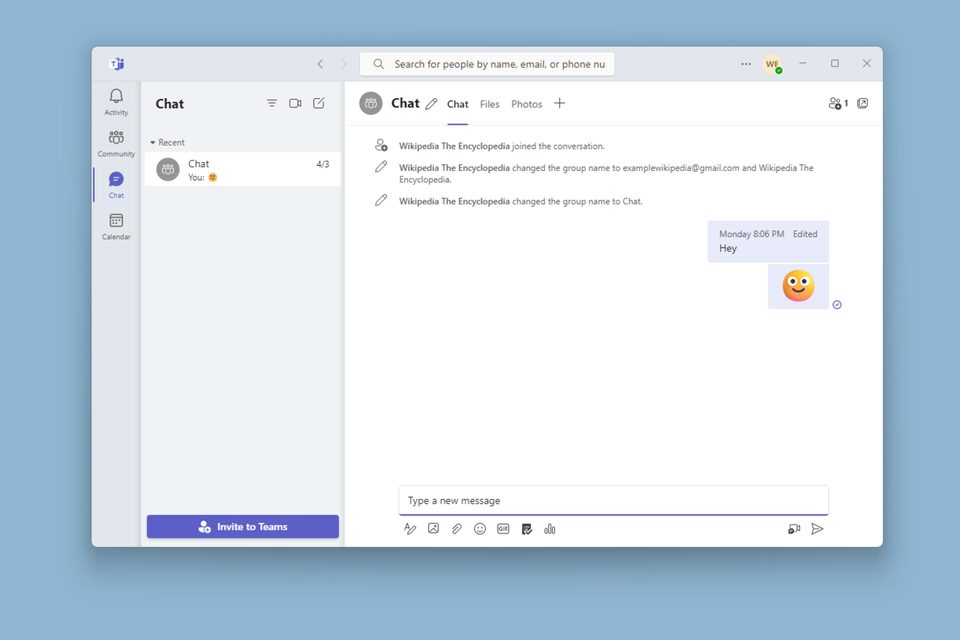
In a Frankfurt hotel lobby two winters ago, a man at the next table was twenty minutes from the most important call of his quarter, and the call would not let him in. He was selling logistics software to a mid-size German manufacturer, and the meeting was scheduled in Microsoft Teams because the customer's IT department allowed nothing else. His client ran the enterprise edition of everything, and somewhere between the visitor wifi and the customer's tenant, his access died: the screen said he should ask his administrator to enable external access, and his administrator, back in a New Jersey office park, said his license tier did not include it, and the tier was correct, and so the conversation climbed a support ladder one rung at a time while the customer waited in a silent channel. The demo went out an hour late to an audience of one. He apologized twice, in two languages. The software itself worked beautifully once he was inside it. I have thought about that lobby often, because nothing in it was a malfunction.
That is the argument. Teams is the best-selling collaboration software on earth mostly because it is not sold at all. It is a condition of licenses the organization already bought, and the lobby is what that fact looks like at ground level: the tool works, the entitlement layer is the tool, and the person who pays is rarely the person who chooses.
You already bought it
Start with the mechanism, because it is unusual and it explains almost everything else. Microsoft 365 licenses carry Teams the way a house carries a water heater; nobody selects the water heater. For a company already paying per seat for Office, adopting Teams costs the chief information officer a meeting, not a budget line, which is why Teams accumulated hundreds of millions of users faster than any product in the category and why Slack, which had to be bought by the seat, filed a competition complaint in Europe rather than lose to it on product. The complaint worked, in the way complaints work: in July 2023 the European Commission opened a formal investigation into the bundling, per Wikipedia's account, and by June 2024 it had charged Microsoft with antitrust violations over exactly this packaging. Microsoft began selling Teams as a standalone SKU in response, at about $4 per user monthly on the annual plan per current listings, which is less a price than a confession: the standalone product exists so regulators can see a choice, and the bundle remains where the actual market lives.
Consider the incentive. Microsoft does not need Teams to win a fair fight, because the fight is not fair and nobody involved believes it is. The product is engineered to be adequate, integrated, and renewing; its per-seat economics are inherited from a contract the customer signed for Word. The person in the lobby was not the buyer and the buyer was not in the lobby, and the distance between those two facts is the entire business model.
The complaint consensus is about weight
The user-facing criticism has been stable for years, and it is worth reporting it accurately rather than as a pile-on. Reviews and user surveys converge on the same list: the client is heavy, consumes memory and attention out of proportion to its tasks, and its notification model treats every channel as urgent until told otherwise. Channel sprawl sets in around month six, when organizations discover they have built a bureaucracy inside a chat app and no one remembers who owns which team. The praise is equally stable and equally real: the integration with Office documents is genuinely excellent, meetings and chat and files behave as one surface rather than three, and for regulated industries the compliance tooling is more complete than any competitor's. Teams survives contact with reality, for a specific kind of reality: the reality of a large organization that has decided, at some level above you, that coherence is worth more than taste.
The new variable is the AI license. Microsoft 365 Copilot sells at thirty dollars per user each month, on top of licenses that already cost more than most competitors charge for everything, and Teams is where Copilot's meeting summaries and recaps live. Read the arc plainly: the bundle made the chat free, the chat made the suite sticky, and the AI is the newest reason for the seat to exist. Who benefits if you believe the demo? The demo shows a meeting that summarizes itself. The meter shows thirty dollars a seat, billed forever, for summaries that a $9 attendee taking notes would also have produced. I am going to be unsympathetic for exactly one sentence: a summary is a document, and documents are the one thing this company already sold you.
The case for the bundle, argued properly
The strongest counterargument deserves its full weight, and it is stronger than Teams's critics usually admit. For an organization that has standardized on Microsoft 365, choosing Teams is not a failure of imagination; it is a correct answer to a real question, which is how many vendors, security reviews, identity systems, and support contracts a company should run to let four hundred people talk. The alternative to Teams is not Slack plus taste. It is Slack plus a second identity provider plus a compliance review plus a renewal negotiation plus a support escalation path, and every one of those has a cost denominated in money or hours, usually both. Single-vendor coherence is a feature, and it is undervalued by people whose incentives are to review software rather than to run it. I watched IT departments choose Teams in exactly this way, eyes open, almost gratefully, and I have stopped counting it as a mistake.
Both things are true. The bundle is a moat, and the moat is also a lobby with a locked door in it.
It depends, then, on whether your organization has already decided. If you live inside Microsoft 365, Teams is the correct default, the debate is unwinnable, and you should spend your energy on channel governance instead of tool selection. If you have a genuine choice, be honest that you are choosing a suite, not a chat tool, and price the coherence you are buying, because the chat is the cheapest part of the contract.
The variable worth watching is whether Copilot migrates from add-on to base license. The moment the AI price folds into the bundle the way the chat once did, every seat in every tenant is repriced by fiat, and the argument about whether Teams is good becomes as irrelevant as the argument about whether your water heater is good. In Frankfurt, the salesman rescheduled, and the demo eventually ran. His license problem stayed exactly as it was. The meeting simply went through.