Jason LeeSlack
Item 07 of 45
Slack sells presence, and presence is not the same as progress
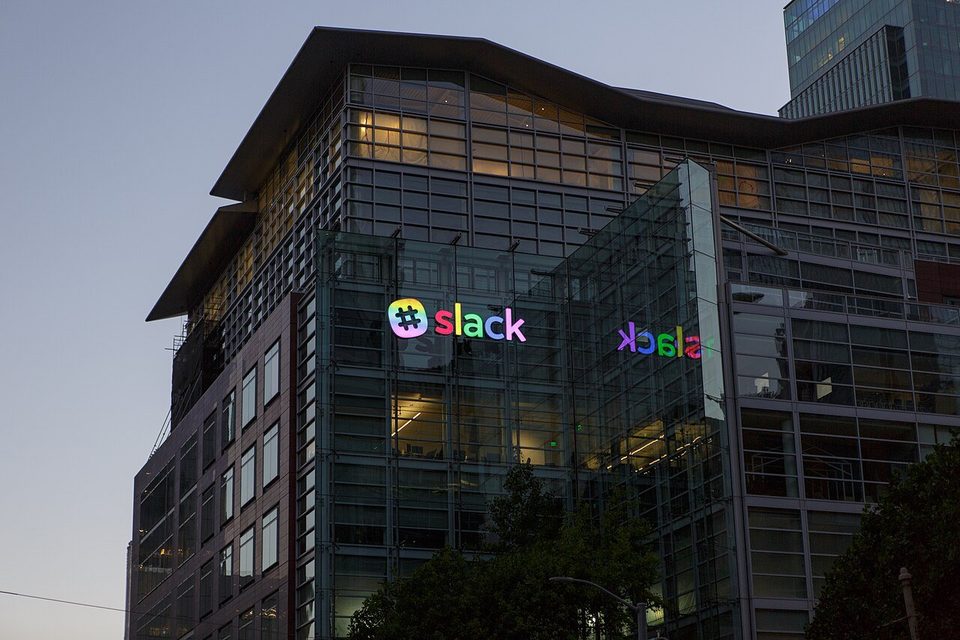
I was embedded with a nine-person product team on a short engagement the morning Slack went down for most of a working day in the summer of 2022. By nine fifteen the work had moved to a group text and a shared note. Somebody wrote decisions in the note as they were made, in order, with names attached. The day was noticeably quiet. People put their phones face down. Around noon the team lead said, half as a joke, that she had gotten more done that morning than in any week that quarter, and nobody in the room laughed, because she was right and everyone knew what the observation implied. At 12:40 the service came back. The channels refilled within the hour, unread badges multiplied, and the shared note was never opened again. At renewal the following spring the company paid without a discussion. I remember the whole thing mainly for the lead's face when she said it, which was not the face of someone describing a vacation. It was the face of someone describing an allergy she had learned to live with.
That morning is the argument. What Slack sells is not communication. The team had communication before, during, and after the outage, in two formats that cost nothing. What Slack sells is ambient presence, the permanent adjacency of everybody to everything, and the outage removed the adjacency while leaving the communication intact, which is how you could see the difference for one clean morning. Which is not the same as progress. That is the distinction the renewal paid for, and the distinction almost nobody on the team could have named.
The dot is the product
Consider what the interface actually rewards. The green dot, the typing indicator, the read receipt, the "active two hours ago" hover, the channel that behaves like a standing meeting with no agenda and no end. Slack's reviewers and its users converge on the same complaint from opposite directions: The Digital Project Manager's evaluation lists notification overload as a core risk, and the people who quit Slack tend to describe the same sensation, that the tool converts thinking time into reaction time one badge at a time. The praise converges too, and it is real: a search function good enough to be a memory, integrations with thousands of other tools, huddles that replaced a class of meetings. A 4.6 rating across thousands of reviews does not happen by accident. The product is well made. The product is well made at keeping you adjacent. The complaint and the compliment are the same sentence read from two ends, which is the most honest thing I can say about any tool I have examined this year, and I mean it as neither.
There is a version of this criticism that blames the users for their settings, and I want to distinguish myself from it. People do not configure their way out of a design goal. The dot is not an oversight; it is the product's thesis rendered as an interface element, the same way the confetti was Asana's. Software that sold presence at retail would have to label it. Software that sells presence per seat labels it "collaboration."
The meter moved from seats to conversations
Now the incentive audit, because the money explains the interface. Slack is priced per person: a Free tier with ninety days of history and ten integrations, Pro at $7.25 per user monthly billed annually, Business+ at $15, Enterprise+ negotiated, per the current price lists. The buyer is a company, and the company is billed for every consciousness it enrolls, which means the product's job is to be where everyone's working life happens. Two price increases since 2022, and the standalone Slack AI add-on discontinued and its features folded into the upper tiers, read as the same strategy from a new angle: the seat is the unit, and the AI is a way to make the seat worth more, not a way to make the work smaller.
The ownership matters more here than anywhere else in this category. Salesforce announced the acquisition of Slack in July 2021 for roughly $27.7 billion, per Wikipedia's entry, and a company that size did not pay that number for a chat tool. It paid for the surface. Salesforce's agent business, Agentforce, is priced by the conversation, and Slack has been positioned as the place where those conversations happen, the interface between your colleagues and your company's purchased machines. Watch what that does to the definition of a message. A seat is billed for existing. A conversation is billed for occurring. When the system that watches the channels earns money per exchange it handles, the definition of what deserves an exchange will not stay still. Who benefits if you believe the demo? The demo is a calm, quiet inbox where the assistant handles the noise. The meter earns on the noise. Those are not aligned incentives wearing the same logo, and I am going to be unsympathetic about it: a per-conversation meter is a bet against silence, dressed as a butler.
The case for the channel, argued properly
The strongest counterargument deserves better than a shrug, so here it is at full weight. For a distributed team, the alternative to Slack is not calm. It is meetings and email, and both are worse. The outage morning that opens this essay proves less than it appears to, because the work that moved so gracefully to the group text was work that could be done alone, and the work that needed nine people to know the same thing at the same time happened in exactly one place: the shared note, which was a channel. Ambient adjacency is not a scam for a team whose actual constraint is coordination. It is the cheapest coordination they can buy, and the review consensus agrees: the product fails as project management and excels as shared consciousness, and a team that knows the difference gets real value from it. I have seen organizations run substantial parts of their operation on Slack for a decade without decay, usually because one person enforced channel hygiene like a building superintendent, and it worked.
Both things are true. The best coordination tool on the market bills for presence, and presence quietly reschedules attention.
It depends, then, on which constraint your team actually has. If your people are separated by geography and the risk is that nobody knows anything, Slack is the best instrument on the market and the seat is cheap at the price. If your people are co-located or the risk is that nobody thinks, the same instrument will convert your deepest hours into reactions, and the renewal will arrive with no meeting attached, which is how you can tell what you bought.
The variable worth watching is that conversation meter. The agent that reads your channels for a fee is paid to find things worth interrupting you about, and it will find them, because that is the incentive. The morning Slack went down, the note got written. The morning it came back, the note got ignored.