Jason LeeTrello
Item 43 of 45
Trello survived as the wedding planner, and the wedding planner never pays
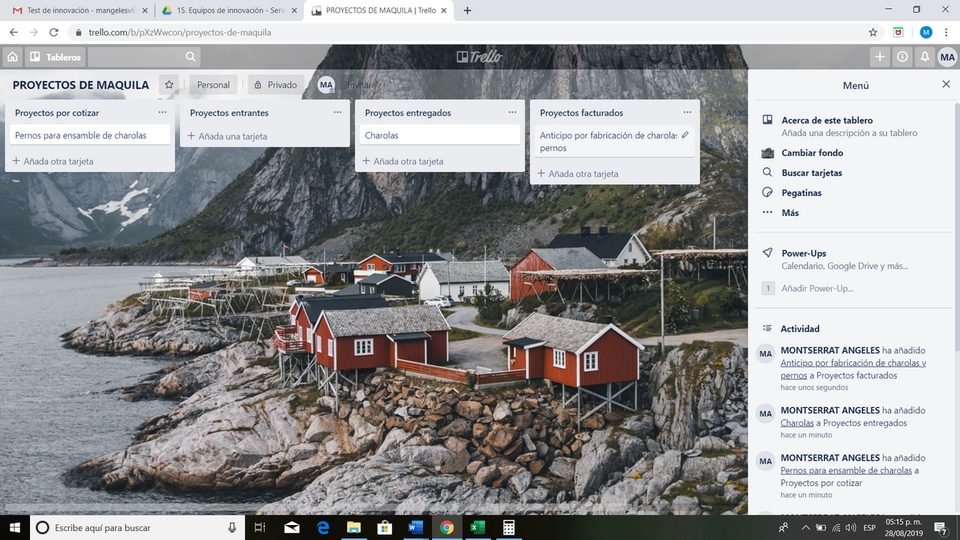
In 2014 I watched a partner at my old firm demo a project tracker to a client's operations team, and the demo got applause. That is not a thing software does. He opened a board with five columns, dragged a card across it, and the card had a face on it and a due date, and the client's COO leaned forward and said, "finally I can see what everyone is doing," and a man near the window actually clapped twice. The license cost nothing, the training was the demo, and I remember thinking we had somehow gotten away with something. Eighteen months later the same board held four hundred cards, the Doing column held sixty-three of them, and the client's project office had bought Jira and migrated everything out, quietly, in the way companies migrate things they are embarrassed to have loved.
The applause was correct and it was also the whole mistake. Trello's product is legibility, a state of the work you can read from across a room, and legibility has a load limit. The market has since delivered its verdict, and the verdict is stranger than failure: the tool survived, thrived even, mostly in the places nobody was ever going to pay for it, the wedding plans and apartment moves and job hunts, which is the segment of the task market that pays in nothing at all.
Legibility is the product, and legibility has a load limit
Understand why the demo worked, because the mechanism is the honest part. A Kanban board is the most legible interface ever shipped for ad hoc coordination: every unit of work is a card, every card has one home, and the state of the system is perceivable in a glance without a report, a sprint ceremony, or an admin. Trello wrapped exactly that in a browser in 2011 and made the empty board delightful, which is a design achievement worth naming. The trouble arrives on a schedule. There is no layer between a card and a board, so a project is a board and a subtask is a card and a phase is a list, and the moment a team's work exceeds one screen's worth of attention, the columns stop describing anything. Custom fields and card mirroring arrived later as patches, and they are good patches, but they are patches bought with configuration labor, which is to say the product started charging you in setup time for the legibility it used to grant at zero. The complaint consensus in user forums tracks this precisely: boards that lag, cards as landfill, and the recurring question of where the actual thing is, which is the question the board existed to answer.
Atlassian bought the top of the funnel
Atlassian paid $425 million for Trello in 2017, and the price only makes sense if you ask what was for sale. Not the revenue, which was thin, and not the technology, which is a database with opinions. The free plan is what was for sale: unlimited cards, ten boards, ten collaborators per Workspace, a million individuals trained on the Atlassian account system. Consider the incentive. The free tier is not generosity, which is not the same as free of charge; the currency is your identity, because every personal board ends in an Atlassian account, and accounts are where an enterprise vendor's salespeople go hunting. The squeeze has been administered with a certain discipline since: workspace limits restructured, previously free features moved behind the paywall, and a 2025 thread on Atlassian's own community forum titled the update one of the worst in the past five years, which on a company's own forum is approximately a riot. The pricing as it stands: Free for ten collaborators, Standard at $5 a user monthly, Premium at $10 with the timeline and dashboard views and the AI layer, Enterprise at $17.50 annual-only with a fifty-seat floor. One detail is the tell. Simple data export, the right to leave with your own cards, sits behind Premium at $10 a user per month, and one pricing analysis has done the further arithmetic that Enterprise bundles Atlassian Guard, a $4 per user item elsewhere in the catalog, which drops the real premium over Premium to about $3.50 for companies already running Jira. The free user is the funnel. The paying organization is the harvest. The wedding planner is the brochure.
The card cannot hold a team
The failure at team scale is mechanical, not moral. A card is an object with a title, a description, a checklist and a comment thread, and teams do not actually coordinate in objects; they coordinate in dependencies, owners, and time, none of which a column has. Sixty-three cards in Doing is not a discipline problem. It is the tool reporting, accurately, that the team's work has no shared shape, and the board has no vocabulary for shape beyond left to right. This is why the prestige migration to Linear and Notion happened among people who manage software, and why the migration has been so smug about it. The smugness is a data point I distrust, for reasons the next section will give.
The case for Trello deserves better than its enthusiasts usually mount, so here it is at strength. Most of the world's coordination is not software. It is a parents' association, a restaurant opening, a department move, ten people who will never attend a sprint retrospective and should not, and for that world the board remains the correct interface and the free tier remains the best free product in the category. The people who sneer at Trello in tool threads are arguing from the needs of software teams, a minority of the coordination that actually happens, and the industry's per-seat pricing models needed everyone to need the heavier tools, so the lighter one got rebranded as a toy. Fashion is not a verdict. A wedding committee that learns Trello in ten minutes and abandons it when the wedding ends has used it exactly correctly, and no framework on this earth can say the same.
So the verdict, conditional as the tool itself. For personal admin and any queue small enough to fit in one glance, the free board is still the cleanest thing in the category and you should keep it. For a team past ten collaborators with real dependencies, you would be paying monthly for a legibility that collapses under load, and the honest endpoint of that purchase is Jira. The variable worth watching is the free tier, because Atlassian's funnel now points at AI products with enterprise price tags, and a brochure that costs money to print eventually gets smaller. The COO could finally see what everyone was doing. Nobody in that room asked what she would do once she saw it.