Jason LeeRoam Research
Item 20 of 45
Roam sold the promise that a link is a thought, and charged rent on the promise
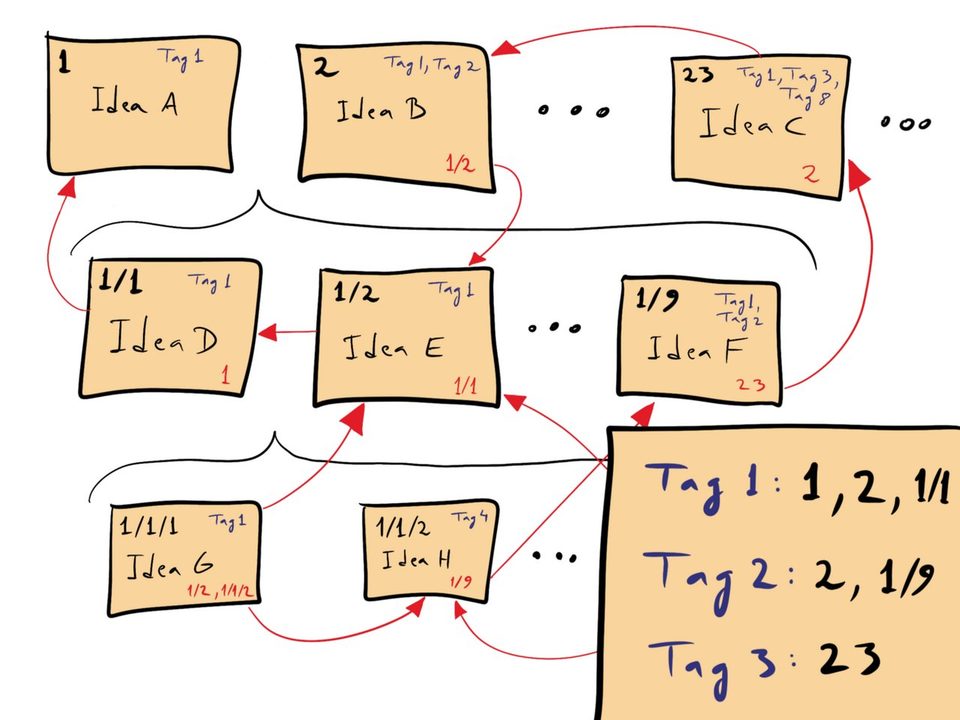
Sixty dollars and a Sunday afternoon in the spring of 2021 bought me a workshop that promised to fix my reading, held over Zoom, and a teacher whose method was simple: stop reading books in order, and instead give every book a page, give every page a date, and connect everything you underlined to everything else by way of short codes you keep in the front cover. She called the codes "hooks," and the pitch was that after two years you would own a private web of everything you had ever read, a thinking instrument no search engine could match. I did it for eleven weeks. I still have the notebook, and I have opened it four times, which is not a criticism of the method and is exactly a criticism of what I bought. What I bought that Sunday was not a reading practice. It was the feeling of having solved reading, available at a lower price than reading.
The turn is this: Roam Research sold that feeling at fifteen dollars a month, at scale, and for about two years it was the most talked-about product in my corner of the internet. The pitch was networked thought, the idea that your notes should form a graph, every note linked to every other automatically and reversibly, so that thinking becomes walking around inside your own head with a flashlight. Then the moment passed, and the way it passed is the actual review.
The rent is the product, and the graph is the excuse
Roam's pricing deserves to be read as a document, because it is the strangest in this series. There is no free tier. Pro is fifteen dollars a month, a hundred and eighty a year, and then there is the Believer plan, five hundred dollars up front for five years, which is eight dollars a month and a wager that you believe in the company more than the company has recently believed in itself. No other product I have profiled asks you to prepay half a decade of faith in a small team with no outside funding. Consider the incentive. A subscription company funded by subscriptions has exactly one job: make next month's renewal feel obvious, which means the roadmap drifts toward whatever makes the tool feel indispensable rather than whatever makes your notes durable. Roam was never venture-funded, which the faithful read as independence and I read as thinner margin for error, because a self-funding company with a slumping user base has one rational move, and that move is to slow down and keep the believers comfortable. The five-hundred-dollar plan is that move written out as arithmetic: smaller revenue per year, collected sooner, from the customers least likely to leave, a financing instrument dressed as a loyalty discount. The development pace did slow, per every directory that tracks this stuff, and competitors that copied the ideas for free, Obsidian and Logseq, shipped faster and took the audience (the 2026 state of play is summarized here). The directories now score the product honestly in aggregate, features high, value low, and one of them gives the whole thing a C plus, which is the grade of a product that is historically important and hard to recommend at this price. Both things are true: the ideas Roam introduced were genuinely good, and the company that introduced them did not need to survive for the ideas to matter.
The graph was never your memory
The case for what Roam built is the strongest I have come across in this series, and I want to argue it better than its evangelists did, because the dismissal is too easy. The mechanic at the center of the product, the bidirectional link, is real cognitive technology. When a note tells you every other note that mentions it, you stop deciding where a thought lives, which was always a fake decision, an artifact of filing cabinets; the graph lets the connections surface themselves, and people who used it seriously, researchers mostly, describe the daily notes as a lab notebook that indexes itself. That is not a gimmick. The part I paid sixty dollars for in that workshop, the feeling that connection was happening without effort, worked in Roam for the people who fed it daily, and I will not take that away from them, because I watched it work for exactly as long as I fed it. The counterargument to the counterargument is the part nobody wants to hear: the graph is only as honest as the labor underneath it, and the labor is daily. Skip two weeks and the flashlight still shines, but the room it illuminates is one you have stopped furnishing. The tool did not make thinking cheaper. It made thinking's price visible, daily, in a way that amused the people whose job was already thinking and humiliated everyone who hoped the subscription had moved the price to them. That is also the honest answer to the question of what Roam was selling in those two peak years. Not a tool. A mirror, with a billing cycle.
So the verdict, and it is shorter than the mechanism section. If you are a researcher who feeds a graph daily and already does, stay; the block references remain the best in class and your data's gravity has you now, pleasantly. If you are anyone else, the fifteen dollars is rent on the feeling I bought for sixty in a Sunday workshop, and the feeling does not compound, and Obsidian gives you the same mechanic free with your files on your own disk. It's whether your graph has ever once changed your mind, because if the answer is never, the rent is due on a room you have never lived in.