Ryan CobblerComcast Business internet
The card terminal went down on the second Saturday of March
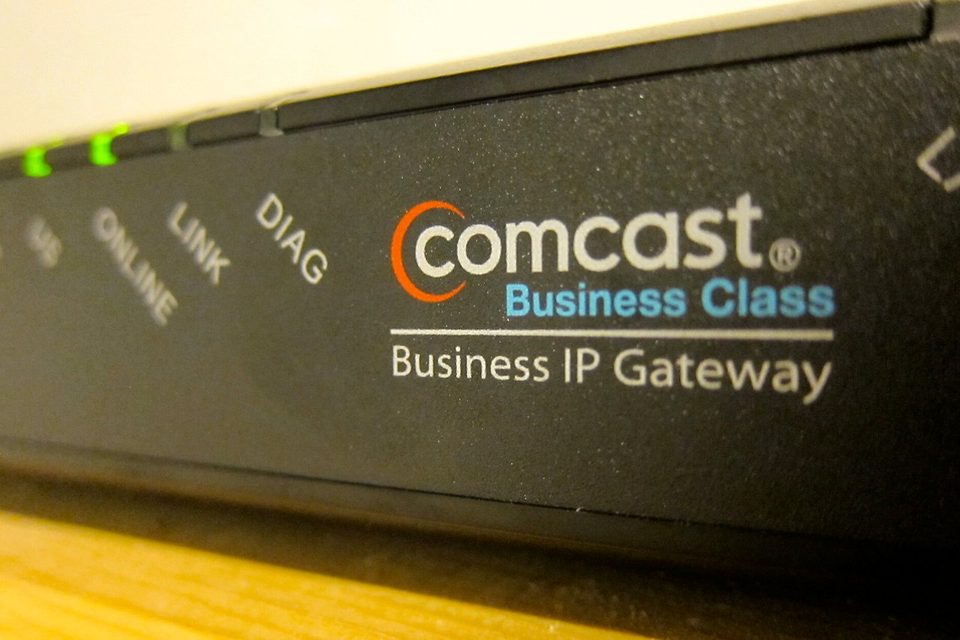
The card terminal at the tax prep office started declining every card at 10:04 in the morning, the second Saturday of March. Filing week. Four people in line, and one of them carried a folder the size of a phone book.
Nobody had touched the internet. It was up. The site loaded, email worked. But the card machine talks to its processor through a firewall rule keyed to the cable modem's IP address, and Thursday night the modem rebooted after a storm. Comcast handed the line a fresh dynamic address. The rule still pointed at the old one. Every swipe died in the handshake.
I had it back in twenty-five minutes by updating the allowlist over the phone with the processor's support line, which is a polite way of saying I was on hold. The real fix is the one the office never bought: a static IP. It runs ten to thirty dollars a month. One address that never changes, so Thursday's storm would have been a blink nobody noticed.
The internet itself is fine. Speeds arrive as advertised and the support line answers 24/7 without much of a robot maze. What you're actually buying is a twelve-month promo with a staircase printed on page two of the agreement. The staircase is the product. Nobody reads page two.
The staircase, read out loud
Comcast's own small business page spells out the ladder for its 300 Mbps plan. Sixty dollars a month for the first twelve months, on a one-year agreement, with autopay and paperless billing from a bank account. Months 13 to 24, a hundred. Months 25 to 36, a hundred forty. After that, regular rates, whatever those are that week. That's on their public page today, not buried in a PDF.
| 300 Mbps, by month | Promo path | Five-year lock |
|---|---|---|
| Months 1 to 12 | $60 | $110 |
| Months 13 to 24 | $100 | $110 |
| Months 25 to 36 | $140 | $110 |
| Month 37 on | regular rates | $110 through month 60 |
| First three years | $3,600 | $3,960 |
The tax office signed in April at $60. This April the same line became $100, plus taxes and fees that ran roughly fifteen percent on top. Nobody called. Nothing was announced. The bill just grew, like lint in a dryer vent. Nothing happens the day the lint forms. Something happens the day the vent plugs.
There's a fork in that agreement worth knowing about. You can skip the promo and take a five-year price lock at $110 for the same tier. The promo path over three years averages about $100 a month, then drops you off the cliff into regular rates, and Reddit threads are full of business owners whose renewals doubled. The lock looks expensive in year one and looks smart in year four. I'd take the boring one.
The twenty dollars that saves a Saturday
A static IP costs $10 to $30 a month depending on region and who answers the phone. It's worth it if anything in the building gets whitelisted. Card terminals, remote access to a server, a camera system the owner checks from her kitchen. One longtime Comcast customer posted that his static IP fee went from $4.95 to $29.95 in two years, so even the add-on climbs. The tax office's line has one now. About $240 a year, and it paid for itself the first time in twenty-five minutes.
What it doesn't buy is uptime. When the line is down, it's down. And the upload speed on that 300 tier is thin, about 20 Mbps, for an office that ships scans to a cloud all morning. Ask about upload, not download. Nobody in a tax office has ever complained the internet was too fast going up.
The April phone call
The renewal is negotiable, quietly. Retention desks tend to open around a ten to fifteen percent trim. Walk in with a quote from the other cable company in town and the number moves much further, forty percent or better in the reports I've read. We called in April with exactly that. The $100 month became $85. Ten minutes and one printed page.
Read page two before any of that, because it lists the parts the sales call skips. The early termination fee equals the rest of the contract value. Canceling takes written notice. After the term ends it rolls to month-to-month and bills you until you say stop. Service changes run $50 to $500. Taxes and fees add ten to twenty percent that never appears in the quoted number. The modem rents for $5 to $10 a month unless the package includes equipment. Every one of those lines shows up on the bill before it shows up in your budget.
Full disclosure, since I hold myself to it. I'm not a Comcast Business customer. My house rides residential Xfinity and my nine client websites live on a Hetzner box in Virginia. The business line belongs to the tax office. But I sat on that office floor on the second Saturday of March, and I read page two in April, so the opinion is earned even if the bill isn't mine.
What to do Monday
Pull your internet bill tonight and find two things on the second page. What the rate becomes when the promo ends, and which month that happens. Put that month in your phone with an alarm thirty days ahead of it. That alarm is the whole post. The tax office's next step, to $140, lands next April, and the reminder is already set for the first week of March. Set yours the same way.