Nicholas TongUGREEN NASync DXP2800
59 / 60
the NAS from the charger company
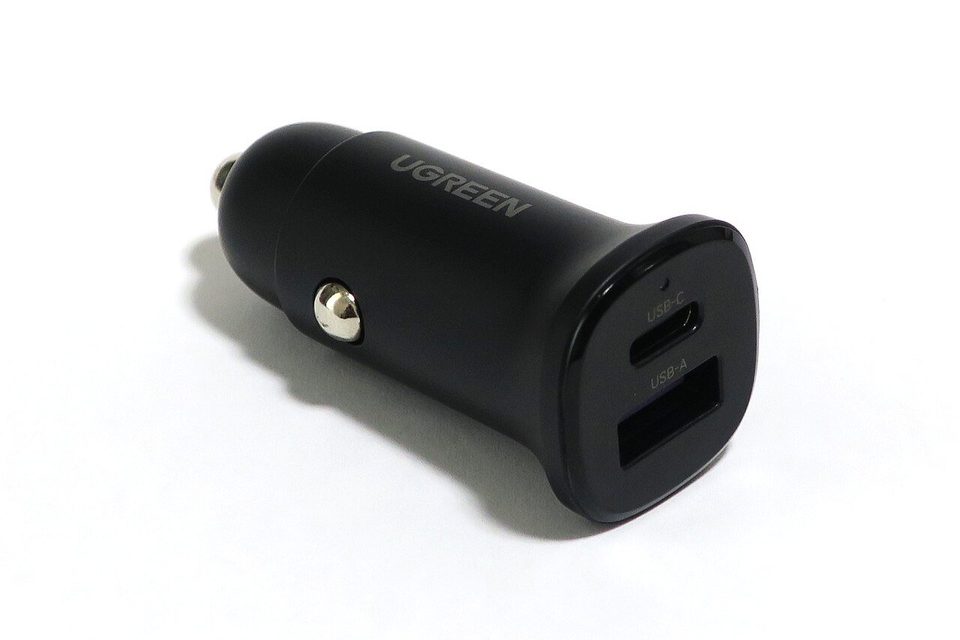
The DXP2800 has had three prices in two years, and the sequence is the review. $239.99 on Kickstarter in spring 2024, when 13,000-odd backers pushed the NASync line past $6 million by UGREEN's own count and made it the highest-funded NAS campaign that platform has seen. Around $399 as the planned retail price once the dust settled, with reviewers since quoting $349.99 to $399. UGREEN's own store says $389.99 right now, and Amazon's price tracker had it at $324 in late September 2026. The hardware never changed. The price of trusting a new vendor did.
Plainly, since the rules require it: this is not a purchase recommendation, and I paid for it myself, $297 in a June 2025 sale, which the tracker marks as the lowest price on record. I already run a Synology DS224+ and a QNAP TS-464, both written up here, and I bought this one as the challenger test. UGREEN made the chargers and cables in your desk drawer, and in 2024 it decided to sell a home NAS. The question I wanted answered wasn't whether the box is good. It's what a newcomer owes you before you put an archive on it.
the part everyone gets wrong
Reviews compare it to Synology on hardware, and on hardware it mostly wins. That comparison skips the actual product. A NAS is a machine whose value is patches, applied by a specific company, for a decade, because its operating system is network-facing code with a login page and a history of ransomware waves aimed at every vendor who ships one. At the MSP I put Synology boxes into small offices for six years, and I have walked into offices since and found units from 2013 still taking DSM updates. That decade of maintenance is what you actually bought. Nobody reviews the vendor, and the vendor is the whole risk.
UGREEN's NAS software has existed for about three years. Synology and QNAP have fifteen-plus of sustained NAS investment, and one Australian reviewer scored UGOS Pro 6.5 out of 10 with the missing points hanging on exactly that unknown, the most honest scoring rubric anyone has applied to this machine.
the hardware is the easy part
On paper the DXP2800 embarrasses my DS224+, which cost about the same bare. Intel N100, four x86 cores, where the Synology runs an older Celeron. 8GB of DDR5, upgradeable to 16, where the Synology ships 2 and begs you to fix it. Two NVMe slots for cache, a single 2.5GbE port, a 32GB eMMC chip booting the system so the bays are pure data, tool-free trays, a magnetic dust filter, 4K HDMI out, and a two-year hardware warranty. The N100's Quick Sync makes this the cheapest UGREEN that genuinely transcodes, which is why the 2026 roundups call it the budget Plex box, and they're right. It idles quiet and cool in a Houston closet where the QNAP sounds like a hair dryer with opinions.
The x86 part matters more than the benchmarks. Because it's a normal Intel box, the community runs TrueNAS and Unraid on these without heroics, which means the hardware has an escape hatch from UGREEN's software. The escape hatch is real, and it's the single best reason to consider this chassis over anything proprietary-ARM. If UGOS Pro stalls, the drives move and the box keeps working under someone else's OS. The value of the silicon survives the vendor. What doesn't survive is the reason you bought it.
the software is a teenager with good grades
UGOS Pro is a Linux system with a clean interface, Docker and virtual machines on the DXP line, a Photos app with mobile backup about as good as Synology's, and an update cadence that has been genuinely frequent. UGREEN publishes a system update plan page, last touched May 2026, listing coming features like Dropbox integration and biometric sign-in. Publishing a roadmap is a good habit for a company with something to prove, and I want to be careful here, because a roadmap is also a list of what the product can't do yet.
What it can't do yet: ZFS anywhere in the lineup, so no QuTS-hero-style integrity layer like my QNAP runs, and snapshot tooling that reads as an afterthought next to Btrfs on the Synology. Community quirk of the month: swap in bigger drives to grow a mirrored pool and it won't enlarge without manual surgery. And the 2FA story is oddly shaped: one-time codes arrived with firmware 1.16, but recovery from a lost authenticator is an emergency email flow rather than printable backup codes. I print codes. Print codes.
The security posture, since that's my beat: UGREENlink is their QuickConnect-style relay, remote access through a URL run by the vendor once you bind a UGREEN account. Their own guidance from April 2025 says don't expose SMB, SSH, or the management interface, and use UGREENlink or Tailscale for remote access. I use Tailscale and leave the relay off. Their privacy policy logs account login history including IP and city-level location, and owners report the box still checks in with UGREEN's relay for updates even with remote access disabled, the one detail I wish had a toggle. None of it is sinister. All of it is worth knowing before you bind an account to a machine holding your household's files.
where it breaks
The break isn't a bug. What happens to the drives if UGREEN loses interest? The drives are fine. They're SATA disks, they read anywhere, and the N100 runs other operating systems. What dies is the thing the box exists to do: patches are the product, and they require a company that still employs the people who wrote the last one. UGREEN is a large, publicly listed accessories company, listed in Shenzhen in 2024 if I have my dates right, and NASync is one line in a catalog of thousands. A side bet in a healthy conglomerate is a strange kind of risk: the company won't die, but the product line can quietly become the thing in the corner of the catalog.
History is the other half of it. Qlocker and Deadbolt hit QNAP boxes years into that company's maturity, aimed at exposed consoles, and every NAS vendor with a growing install base eventually gets its wave. UGREEN's install base is growing exactly the way QNAP's was. No public incident yet is not a security record. It's an absence of evidence, and I don't get to put my photo archive on an absence of evidence. Jurisdiction, handled the way I handle it now: engineering, not morals. The update pipeline and the relay sit in Shenzhen, the box sits on my LAN behind my firewall, the relay is off, and the data that matters has three copies on three continents' worth of infrastructure I chose myself.
what to do
- Buy it for the hardware with a plan for the OS. Test the TrueNAS escape hatch on a spare drive before you need it, not after.
- UGREENlink off, account unbound unless the relay is genuinely your only option, 2FA on, firewall on, management interface LAN-only.
- Snapshots on everything, and an offsite copy, because a NAS is not a backup no matter whose logo is on it.
- Keep the old box running until the new one earns the archive.
That last one is my admission, and it costs me something to write it: eight months in, the DXP2800 has earned my media library and my Docker experiments, and the photo archive is still on the Synology, and I don't know what version two of my trust looks like yet. I have read this company's product roadmaps the way I have never once read Synology's, which is itself the tell.
The DXP2800 is the strongest argument yet that the home NAS market needed new competition, and the clearest picture of what new competition costs, which is that you become the test fleet. The hardware is done. The software is three. The vendor is the variable.
Keep the old box running until the new one earns the archive.