Jason LeeZoom
Item 31 of 45
The best feature was the timer
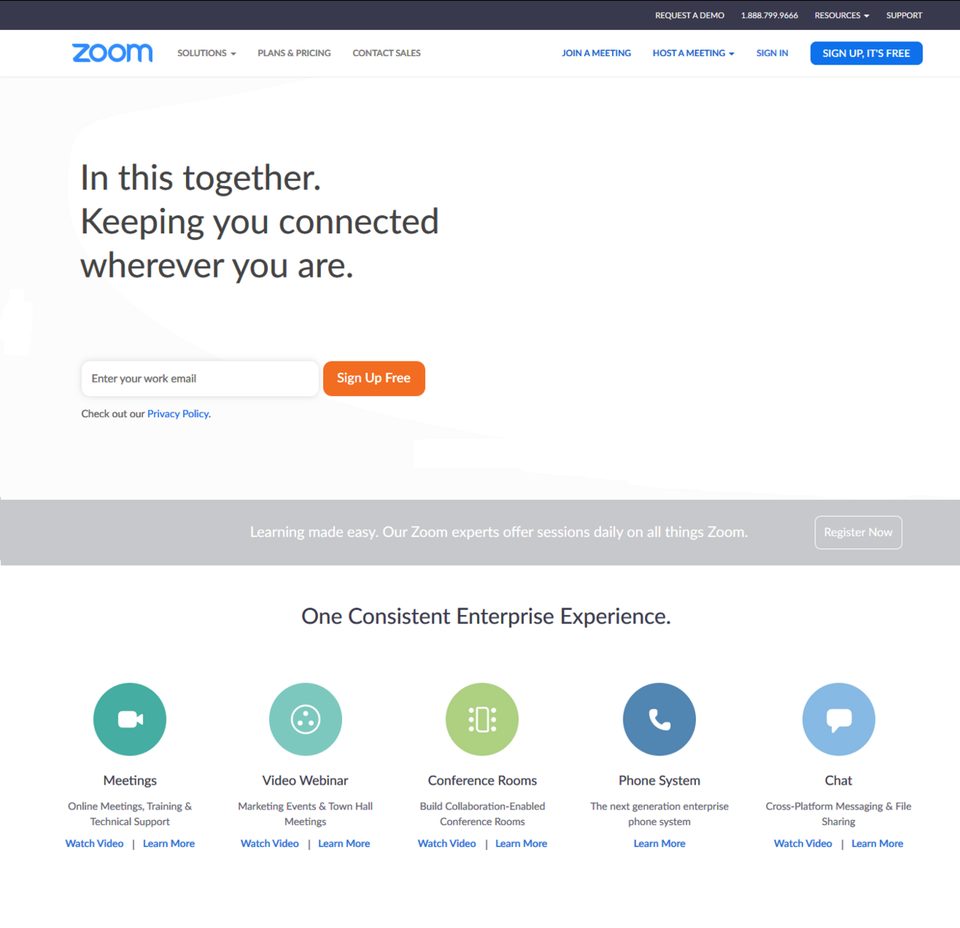
Last winter I ran a small editorial collaboration with two people I'd never met in person, and our meetings lived on Zoom's free tier. Three weeks in, mid-sentence about a deadline, the meeting ended itself: the 40-minute cap on group calls, arrived without ceremony. We reconvened on an ordinary phone call and finished the remaining item in eight minutes, and I remember noticing, slightly ashamed of the noticing, that the call had gone better without the video. The video had been adding something, and so had the timer. When the cap hit, the meeting had a shape. It had been about to become a fourth topic and then a fifth, the way meetings do, and the software had declined to permit it.
I've thought about that timer a great deal while reviewing Zoom, because it's the argument. Zoom is the most reliable product in its category, an achievement I don't want to minimize, and its reliability is exactly what made the modern meeting free. The tool that never drops the call, that handles weak hotel wi-fi and restores itself through packet loss, removed the last natural constraint on meetings, and everything the company has built since follows from that removal.
Reliability is the product, and it is real
Start with what Zoom actually got right, because the record is not in dispute. Eric Yuan, a former Cisco Webex engineer, founded the company in 2011, shipped the product in 2013, went public in 2019, and rode 2020 into something like default status for the entire working world; the company reported about $4.7 billion in revenue for fiscal 2025 and counts more than 300 million daily meeting participants. The technical reputation rests on compression and packet-loss recovery: independent network tests keep ranking Zoom's call quality above Teams and Google Meet specifically on degraded connections, which is the condition every real meeting eventually meets. The pricing reflects a winner's confidence. The free plan caps group meetings at 40 minutes. Pro is $15.99 a seat, Business is $21.99 with a ten-seat minimum, Business Plus is $26.99 and bundles Zoom Phone, and monthly billing runs roughly 30 percent above the annual rate (the full breakdown is here).
| Plan | Per seat, billed annually | What it buys |
|---|---|---|
| Free | $0 | Group meetings capped at 40 minutes, up to 100 people |
| Pro | $15.99 | Unlimited time, 5GB cloud recording |
| Business | $21.99 | Ten-seat minimum, unlimited recording, 300 participants |
| Business Plus | $26.99 | Ten-seat minimum, Zoom Phone included, 1,000 participants |
The ten-seat minimum deserves a sentence of its own, because it quietly changes the answer for small teams: the Business tier commits you to at least $219.90 a month, which is why the reviews keep concluding that solo users and small shops are better served by whatever their existing office suite already includes. Zoom charges per licensed host, not per attendee, so a five-person team genuinely needs only two or three seats. That's a cleaner structure than most of this industry manages, and it's worth saying so before the criticism arrives.
The archive eats the meeting
Now consider the incentive in what Zoom has been building lately, because the platform has spent the last few years repositioning from a video call into something called Zoom Workplace: phone, chat, whiteboard, webinars, and an AI assistant. The AI Companion is the interesting piece, included on all paid plans at no extra charge while Microsoft charges an additional $30 per user per month for Copilot in Teams. Generous, and also legible as strategy: a company that earns per seat wants meetings recorded, summarized, transcribed, and retrievable, because every one of those features makes the seat stickier and the archive deeper. A meeting used to be an event that ended. Zoom's product direction is a meeting that becomes a searchable artifact, a row in a database the whole company can query, and the incentive audit is not subtle: Zoom benefits when the meeting produces more meeting-adjacent material, more recorded hours, more summaries to file. The complaint consensus around the platform is consistent with a company optimizing elsewhere. Long-time users grumble about the price climbing year over year, add-ons stacked on the base plan (Phone at ten dollars a seat, webinars from $149 a month for 500 attendees), the 5GB recording cap on Pro that a heavy week can exhaust, and support that slows below the Enterprise tier. An aggregate of some 56,000 G2 and Trustpilot reviews compiled by Toolradar in September 2026 sits at 3.4 out of 5, which is a strange score for the tool every reviewer calls the most reliable in its category, and the gap looks to me like the difference between loving the call and resenting the bill.
The deeper point is what reliability did to behavior. When the war room moved onto the grid in 2020, a lot of companies discovered the trip had been optional, and the tool that made remote meetings boring and dependable is the same tool that made calling a meeting cost nothing. A recurring complaint in every organization I know is meeting volume, and nobody blames the software, correctly: the software is good at its job. But "does this tool survive contact with reality" gets an unusual answer here. Zoom survives contact with reality better than almost any tool I've reviewed. The question is what it builds in the space it cleared.
The case for the grid, made honestly
The counterargument deserves its full weight, so here it is. Reliability is not a cosmetic virtue; it's the entire product for people whose calls are load-bearing. A firm running client engagements, a clinic doing telehealth under HIPAA with a signed agreement, a company doing all-hands with a thousand employees on Business Plus: for them, a dropped call is a cost no alternative pricing recovers, and the reviews agree Zoom's stability at scale is unmatched at the price. The neutral position matters too. Teams comes bundled in Microsoft's gravitational field and Meet in Google's, and both have closed the feature gap since 2022, but each ties your meetings to a suite decision that is much larger than video. Zoom is the only option on the list that is just a video company, which makes it the only one a company can adopt without adopting a strategy. And the meeting-volume problem is a governance problem, not a technology problem; blaming the tool that removed the friction is like blaming the highway for the commute. Any competent manager can cap meetings, and the 40-minute timer of my scene is available to anyone with a calendar, free, no subscription required. That argument is strong, and I notice it concedes my thesis on the way to defending the company: the constraint has to come from somewhere, because the tool will never supply it.
The variable is what the meeting becomes
It depends, and the dependency is whether your meetings are events or inputs. For a team of ten or more whose calls face clients or patients, Zoom is the boring, correct answer, priced transparently and built by people who evidently care about packets. For a small team already paying Microsoft or Google, the video call is included in a bill you're paying anyway, and the upgrade buys very little. Watch one variable over the next couple of years: the archive. If the AI summaries and searchable recordings make meetings valuable enough to schedule for the record alone, the meeting will have stopped being a conversation and become a content generation step, and no organization should want that. The timer on the free tier knew something the platform has spent five years unlearning. A meeting that can end is a meeting that can begin.