Jason Leethink-cell
Item 46 of 55
The lenders priced the death of the deck, and the partners kept ordering slides
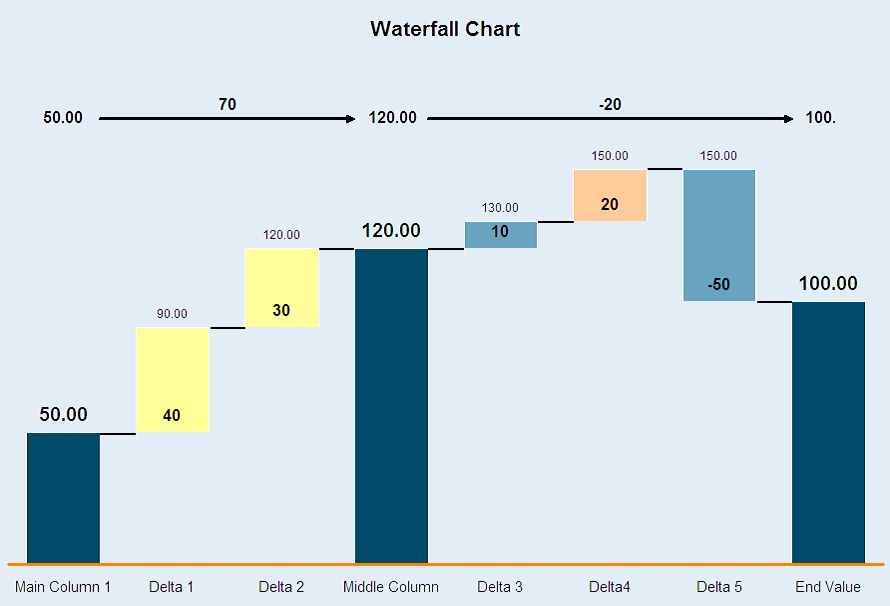
It was 1:40 in the morning in a client team room, the night before a steering committee, and an associate two desks over was rebuilding the same waterfall chart for the fourth time. A partner had called at eleven with two requests: rename a category, move one bar from the second column to the third. Neither request touched the numbers underneath. The associate dragged the boundary, and because the deck ran on think-cell, the cascading bars reflowed in seconds, the connector lines snapped to the new totals, the labels stayed where labels belong. What the tool made free was the change. What it did not make free was the associate's night, and what nobody in the room asked, at any point, was whether the bar was right before it moved. The chart looked more rigorous at 2 a.m. than it had at six. The argument it carried had not moved a cent.
I open with that night because think-cell, founded in Berlin in April 2002 as a spin-off from the Fraunhofer Society, is the rarest kind of product I get to review here: one that has survived more than two decades of contact with reality. It is a PowerPoint add-in that builds waterfall and Mekko charts natively and redraws them when the data or the layout changes, and the vendor claims every top-ten consulting firm among its customers and more than 1.3 million users. It doesn't sell charts. It sells the redraw. That distinction is the whole essay, and it is also the reason the credit market is currently arguing with itself about whether the company should exist.
Making the deck cheaper to change made the deck change more
The mechanism is the one economists describe with Jevons' name attached: when the cost of an action falls, the quantity of the action rises. Before tools like this, moving a bar meant an hour of a person's evening, so partners husbanded their whims and issued them in batches of two, maybe three, and the associate's night absorbed them. After think-cell, a whim cost the partner one sentence on the phone, so whims multiplied, and the fixed cost of all that freedom landed on whoever was at the desk at 1:40. The tool automated the part of deck-making that looks like rigour, the aligned labels and reconciled totals and the confident cascade from total to components, and it left untouched the judgement about whether any of it belongs on the slide. Those are different products wearing the same interface, and only the first one got automated.
Note who buys it. The firm buys the licence, the engagement budget absorbs the cost, and the rate card passes it to the client. In six years of consulting I never once saw the price. The person who chooses the tool never pays for it and the person who pays never chose it, which is the most stable commercial arrangement in enterprise software and explains a great deal about enterprise software. My own position in this is not clean: firms paid for my think-cell seat out of budgets I helped spend, so part of what follows is a receipt for my own years, filed by someone who benefited from the arrangement he is about to audit.
Cinven is selling the company, and the lenders are pricing the funeral
Now the incentive audit, which runs through the owner. Cinven took a majority stake in June 2021 and the founders kept about 30 percent, and the business they bought is, on the numbers, extraordinary: Octus, the credit research firm, reported in February 2026 an EBITDA margin around 80 percent with revenue growth in the mid-teens. Bloomberg had reported in late October 2025 that Cinven was exploring a sale at up to €3bn, which is roughly 20 times the €150m or so of EBITDA implied by that margin. Then the software market sold off, and the process, in Octus' telling, was caught off guard. The interesting number is not the ask. It is the loan: think-cell's 2028 term loan traded down about ten points to a bid near 86, on the stated reasoning that AI makes charting free. A bid of 86 is a price. It is the market's estimate of what the cash flows are worth once the deck dies, and the people setting it are paid to be right about terminal states.
Compare what the vendor itself is saying out loud, because the gap is the story. The reseller notice dated June 24, 2026 announced a price increase effective July 1 without disclosing a single percentage, and list prices only began appearing on the company's own order pages this summer, years after the product became the industry's default. A firm with an 80 percent margin and a locked-in installed base does not need to say the price where buyers can see it, because the buyer and the payer are different people. When the figures did surface, they looked like this:
| Source | Figure | Caveat |
|---|---|---|
| think-cell order page, single user | $30.90 per user per month, billed annually | list prices appeared on the site only in August 2026 |
| Capterra and G2 listings | $28.60 per user per month for 1 to 4 users, about $343 a year | unverified against the vendor, likely pre-increase |
| Reseller notice, 2026-06-24 | increase effective 2026-07-01 | no percentage disclosed |
Consider the incentive from the other chair. The partner is paid to move bars, because a deck that responds to him is evidence of his authority. The associate is paid, in the implicit contract of the industry, to not ask whether the bar is right. The lender is paid to guess when the ritual ends. Only one of the three is pricing anything, and he has never sat in the team room.
The deck may be the last thing to die
The strongest case against everything above was made better by the other side's own reporting than by the bond market's models. Polly Thompson reported for Business Insider in June 2026 that McKinsey consultants are using AI tools to end their dependence on PowerPoint, and the detail that matters is where PowerPoint survives in her account: the working document moves to AI-built sites, while the final output, the thing shown to the client, stays a deck. That final output is precisely think-cell's address. The tool never owned the working document and never claimed to; it owns the last mile, and the last mile is where decisions get ratified in rooms with chairs and a printed agenda. People have predicted the death of the deck for twenty of think-cell's twenty-four years, and the deck has outlived every assassin by absorbing their best features, which is what the tool itself is, a charting engine that absorbed the look of native PowerPoint so thoroughly that young consultants assume Microsoft built it.
There is a kinder version of the defence, too, and it deserves its paragraph. The redraw that consumed my associate's night was not the judgement; it was the typing. A tool that returns the typing returns hours, and some associates spend those hours asking the question nobody asked in 2009, whether the bar belongs where the partner wants it. The tool did not create the unasked question. The ritual did, and a better tool at least makes the silence cheaper to break.
It depends, then, on the ritual rather than the chart. If steering committees survive as the place where a room of people ratifies a slide before a decision takes effect, the licence renews at any price the firm can bill, and whoever owns it inherits the annuity. The variable worth watching is not the loan quote. It is whether the 9 a.m. meeting outlives the 1:40 a.m. tooling. The lenders priced the death of the deck, and the partner is still moving bars, and the bar never had to be right.