Jason LeeHey
Item 12 of 45
Hey is a door, and doors do not scale
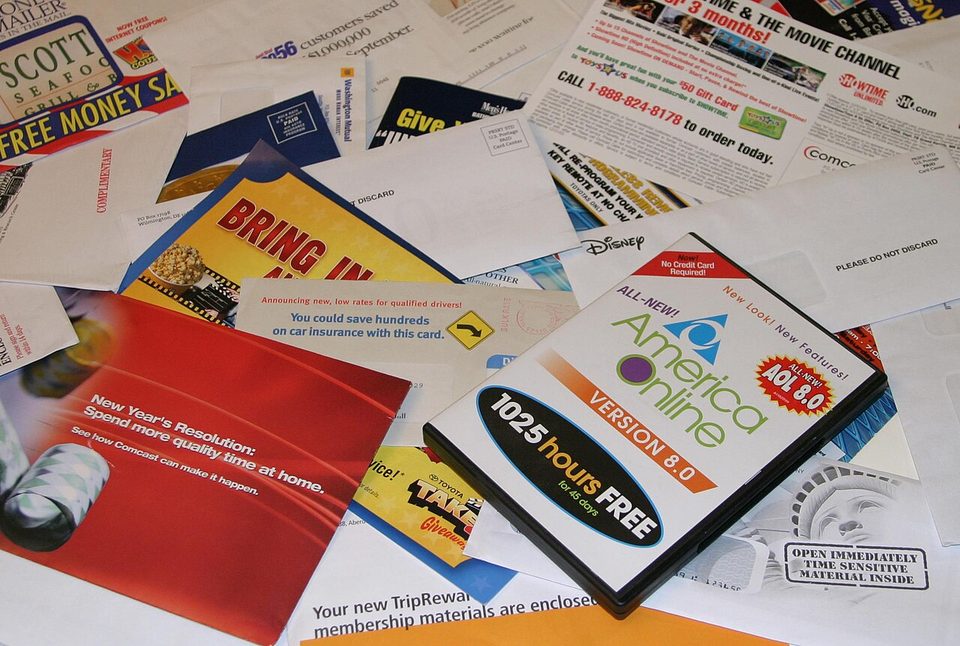
My grandfather screened his mail at the kitchen table, and I mean screened. Envelope to the light. Sender read aloud, in the tone of a judge. Bills opened with a knife he kept for the purpose and set in a folder with a rubber band around it. Catalogs, solicitations, anything with a glossy cover went directly into the bin beside his chair, unopened, while still warm from the sorting room, and the pile in that bin was by late summer one of the landmarks of the kitchen. I once asked him if he was worried he would miss something. He said he had missed something in 1974 and had learned more from the missing than he ever had from the keeping. The system took him ninety seconds a day. It never once failed him that I know of, and it failed my grandmother constantly when she tried it, which is the part I did not understand until I started writing about software.
That table is the argument. Screening mail is a service, not a feature, and for twenty years the email industry has been quietly deleting it. The inbox became a feed, the feed became an obligation, and the door the mail used to have was replaced with a sieve. Hey is a product built on the premise that the door should be put back, and priced on the premise that someone should be paid to hold it.
The Screener is the product
The mechanism is blunt and I admire its bluntness. Hey, launched in June 2020 by 37signals, the company behind Basecamp and Ruby on Rails, does not give you a better inbox. It gives you a threshold. The first time anyone writes you, they land in the Screener, and you decide, once, whether they may reach your Imbox, spelled with an m because the company could not resist, the folder for mail from actual humans. Everyone else, the newsletters, the receipts, the notification storms, is routed without ceremony into a Feed or a Paper Trail, and advertising trackers are stripped from the messages as they arrive. A hands-on review published in September 2026 by the veteran mobile journalist Paul O'Brien describes the arrangement accurately: bold workflow, real lock-in, the Screener and the Feed doing exactly what they claim, and no IMAP support anywhere, per his review. The New York Times tried the service in its launch week and concluded that it had a way to go, which was fair then, and the product has spent six years going.
Notice what the Screener is not. It is not filtering, the machine-guesswork that Gmail has done for two decades with a spam folder and a promotions tab and an accuracy rate that quietly decides your correspondence. The Screener does not guess. It waits for a human decision at the only moment a decision is cheap, first contact, and it holds that decision forever. Filtering is an inference about you. Screening is a boundary drawn by you, and the difference is the whole product.
The cleanest incentives in software, at the price of a door
Now the incentive audit, and for once in this series it is nearly spotless. 37signals has been private, bootstrapped, and profitable for two decades, its founders, Jason Fried and David Heinemeier Hansson, are professionally allergic to venture capital, and the company's pitch on its own pricing page is a sentence no other vendor in this series can make: it does not sell ads, data, or your private information, it sells an email service. The price is a hundred dollars a year, and twelve dollars per user monthly with your own domain for the plan aimed at small companies, with a family plan at a hundred seventy-nine. The customer is the user. There is no seat ladder, no AI meter, no enterprise tier hiding a different business model behind a sales call. If you leave, they lose exactly what they charged you, which is why the product works the way it does, and I want to give this its due: in a category where the largest incumbents monetize your attention, the cleanest deal in email is the one somebody had the nerve to bill for.
And the door locks from the inside. There is no IMAP, no SMTP, no standard exit, no folders in the sense anyone over forty means the word, and the archive you build lives in an application that belongs to one company with one philosophy. Leaving Hey does not mean exporting mail, which is technically possible. It means abandoning a working method, a screening history, six years of decided-at-the-door relationships, and re-teaching every contact where you live. The company would say, correctly, that this is disclosed up front. It is. The lock is real anyway, and the interesting thing about it is what the company prices: two-character addresses at a thousand dollars a year, three-character at three hundred forty-nine, the vanity tier of a lock whose existence the marketing prefers not to mention. Consider the incentive. The cleaner the deal, the less anyone audits the door.
The price is the honest one, argued properly
The strongest counterargument is aimed at people like me, so I will argue it the way its proponents do. Every inbox I have praised in this series is free because you are not the customer; you are the inventory, and the trackers Hey strips from your mail are the visible half of a trade you have been making since 2004 without a receipt. Ninety-nine dollars is the first honest price email has had, the lock-in is voluntary and disclosed, and the protocol purists who sneer at the missing IMAP are defending plumbing that most people have never once seen, while their actual mail is read by machines on behalf of advertisers. For the person whose mail is mostly other humans, the Screener is not a preference. It is the return of a service they did not know they were allowed to buy back. Both things are true. The cleanest deal in email is also the most closed, and the closure is what makes it clean.
It depends, then, on what your mail is made of. If it is made of people, Hey is the best thing that has happened to your mornings in a decade, and the lock will not bother you until the day it does. If it is made of receipts, confirmations, and machines mailing other machines, you would be paying a hundred dollars a year to reorganize your spam into tasteful piles.
The variable worth watching is that vanity tier. Address scarcity is a revenue line now, and revenue lines teach companies what they are. My grandfather died with a drawer of unopened catalogs, and not one person has ever suggested he was behind on his mail.