Ava NguyenAnker 622 MagGo magnetic battery
47 / 48
the little white battery ended my outlet diplomacy
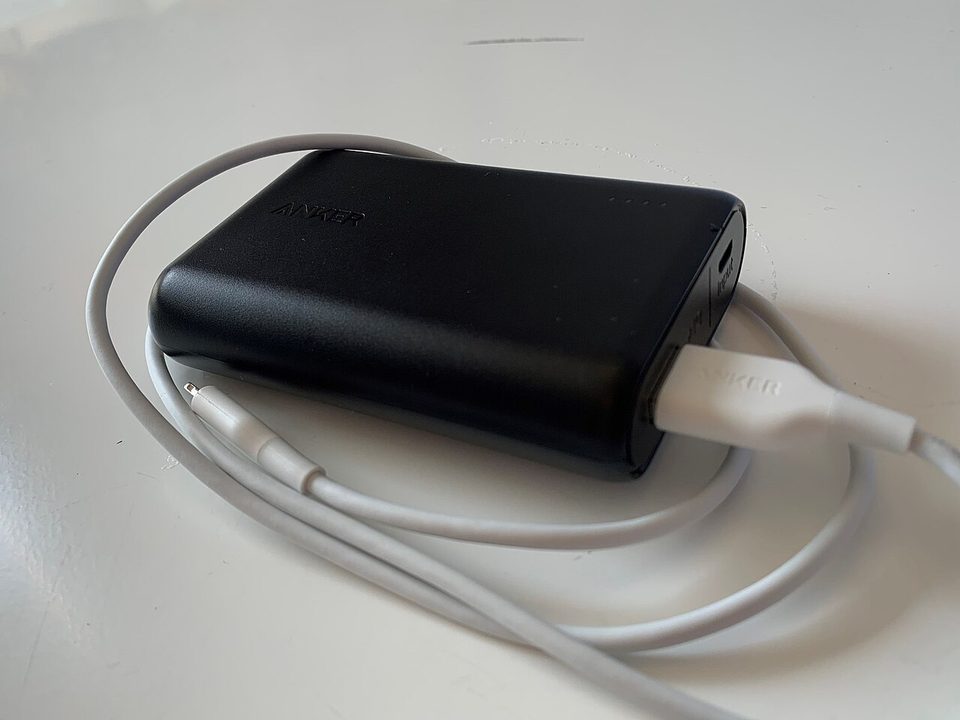
At 4:12 on a Tuesday I was standing in the corner of a coffee shop holding my phone at 11% like it was a wounded bird, doing the thing where you scan the room for outlets and make silent, desperate eye contact with the person sitting beside one. She had a laptop, a charger, and a look that said she had defended that outlet before and would again. I backed off. I ordered a battery from the sidewalk, and it has been attached to my phone, more or less, for four months.
This is the Anker 622 MagGo, it's a 5,000mAh magnetic battery, and it ended a small war I was losing daily.
the honest bit, with receipts
| thing | what it cost |
|---|---|
| Anker 622 MagGo, Dolomite White, on sale | $39.99 |
| list price right now | $47.99 |
| years of outlet scouting as a personality trait | retired |
| one included USB-C cable | already missing, obviously |
The feelings part: I already own Anker's big MagGo 3-in-1 charger and reviewed it here, so this was a low-risk repeat buy from a brand I trust. But I want to be honest about why I bought it, which is that the 20% battery icon had me trained like a lab rat. I would see red and rearrange my whole afternoon around a wall. That was never a battery problem. That was a me problem, and the battery fixed it anyway.
six things, one of them is about fabric
It's about half an inch thick and that's the entire trick. A 5,000mAh battery with a fold-out stand, thin enough that I forget which pocket of my tote it's living in, which is a sentence with a hidden flaw I'll get to. Bigger packs exist, Anker's own 633 holds twice the charge, but those are bricks and this is a coaster with ambition. The whole point is that it lives on the phone instead of in the bag, so the emergency kit and the phone are the same object.
The kickstand is one angle and I respect the commitment. It folds down into a stand at exactly 45 degrees, which is perfect for a show on a train and wrong for a video call, where you want to be more vertical and less reclined. As a designer I have real feelings about a team shipping one confident angle instead of a fussy hinge with six wobbly positions. One decision, made on purpose. It held. I have also knocked the whole phone-battery-stand arrangement off my nightstand twice, because the stand supports a phone just fine and forgives nothing.
The wireless charging is slow and I've stopped caring. It maxes out at 7.5W, so going from 20% to 90% took me about three hours, which sounds bad until you notice it's doing that while clipped to the back of my phone during a completely normal afternoon. This is a sipper, not a fire hose. If you want fast, the side port does it quicker over a cable, and the newer Qi2 packs charge at 15W for more money.
The side USB-C port is the sleeper feature. A cable plugs straight into the battery, so it charges anything with a wire, including my Kindle, my earbuds case, and once, heroically, Priya K.'s Android at a farmers market when her phone hit 3% in the middle of telling me a story about her landlord. Wired takes priority over wireless, so it's one device at a time, and the five little LED dots on the back tell you how much is left without opening any app.
The magnets are aggressive in the best way. It snaps on with a satisfying clack and stays put through a bag getting shoved under an airplane seat, and it comes off with a small twist when you want your phone naked. In four months it has never once detached itself onto the floor of my tote. I check, because I'm the person who loses AirPods in couch cushions, and this thing has never given me a reason.
The fabric cover is beautiful and slightly hostile. It's this soft origami-style fabric in colors with names like Dolomite White and Misty Blue, and it looks like an object a design studio actually signed off on. The fabric is also what folds down to form the stand, and coaxing it open takes two hands and a small complaint every single time. That's my one real complaint about the object, and I still reach for it daily, which tells you where the complaints rank.
the tangent about the little red battery icon
Hear me out on interface design for a second. Somebody at some point decided that at 20% your phone battery turns red, and that one decision has been quietly managing my nervous system for a decade. It's a color choice. A designer somewhere picked a red and a threshold and it turned into a tiny panic that millions of us carry in our pockets. I think about that constantly in my actual job, because it's the clearest example I know that a small design decision can run somebody's whole evening.
So the unhinged part of this review is that a $40 magnet accomplished what ten meditation apps could not. The problem was never that my phone dies. The problem is that I treated a color change like an emergency broadcast. Okay so, I have now started ignoring the red icon a little, which is either hard-won growth or the first stage of a brand new problem, and I'll report back.
the soft landing
If your phone is your boarding pass, your map, your group chat and your camera, and you've ever stood in a public place doing outlet math, this is a genuinely nice little object to own. It's small, it's pretty, it's honest about its limits, and it switched off one daily micro-panic at the source.
I keep meaning to run a proper test, one full charge, count every top-up, make a little spreadsheet like an adult with a methodology, and every time I begin I get about as far as
White battery. Red icon, ignored. One outlet, freed for the coffee shop at large.
- ava 🔋